Welcome to
Mechatronics Engineering & Management · McMaster University
Hi there
I'm Sanawar, a third-year Mechatronics Engineering and Management student at McMaster, currently on the co-op stream and based in Milton.
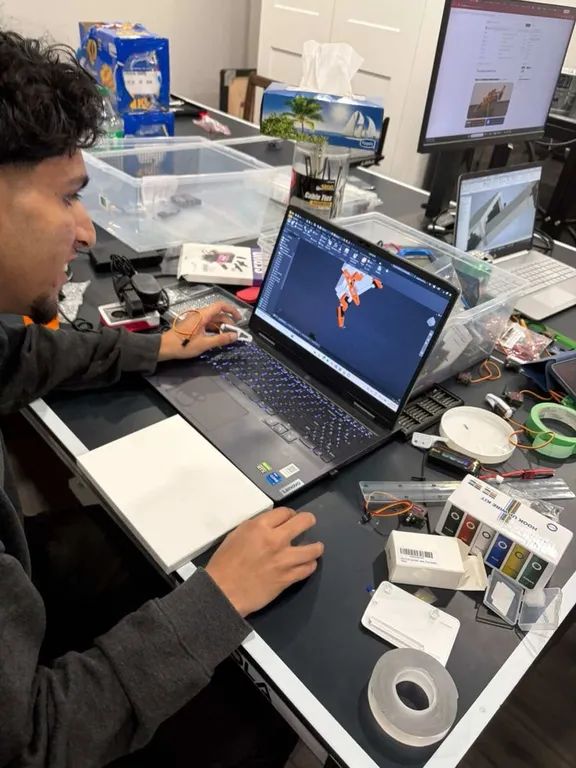
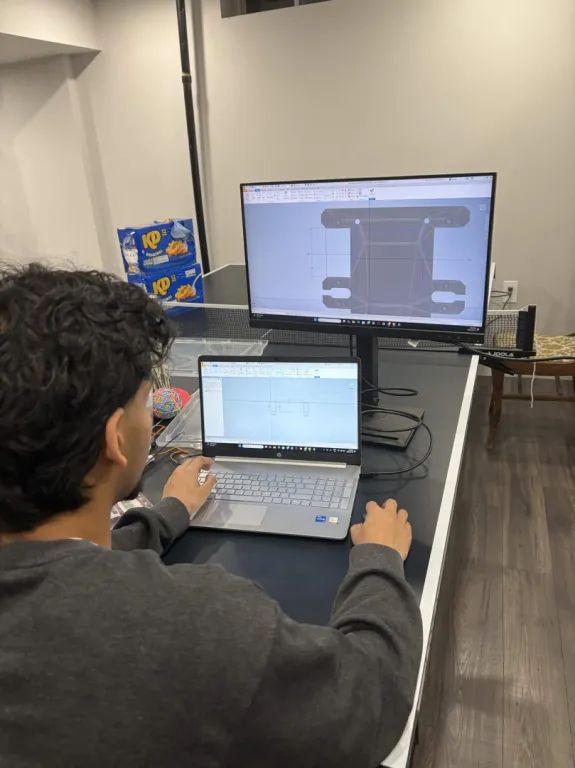
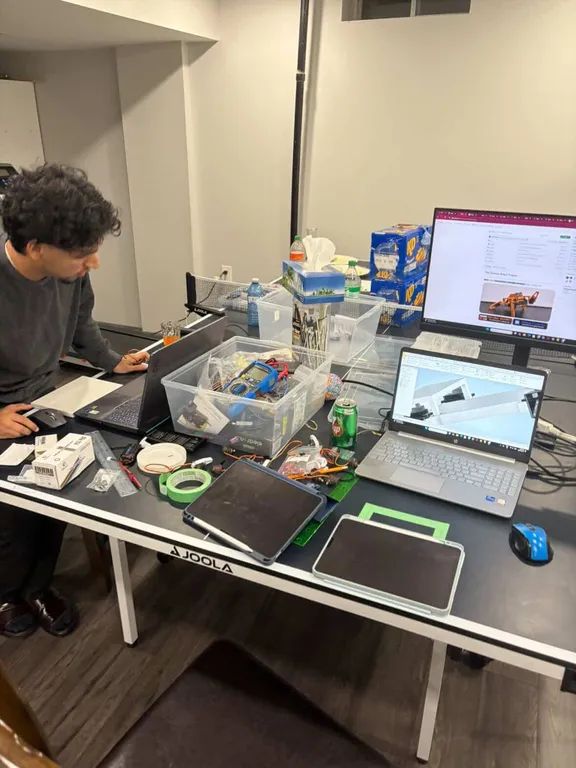
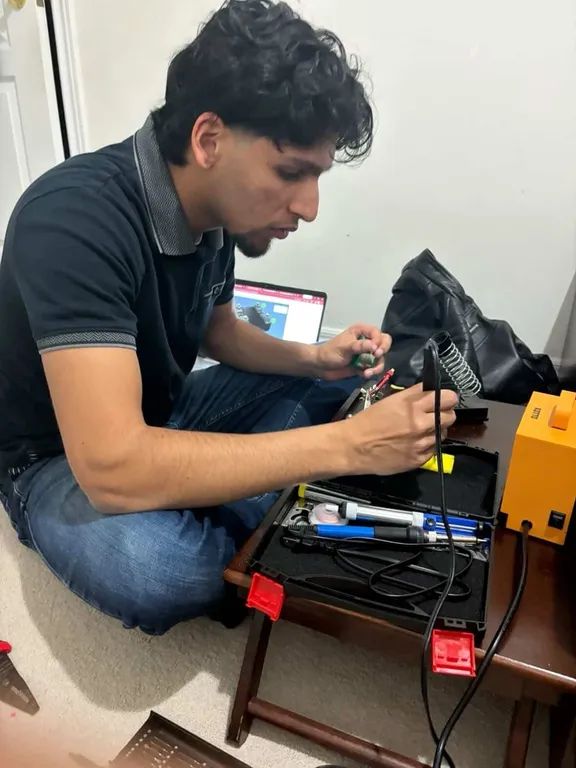
I've always liked building things I can actually see and use. Some of my projects include a PIN-controlled door lock using an ESP32, a kitchen scale that reads the weight out loud, and Cleo, a four-legged robot that my teammate Angelo and I somehow got walking in 72 hours at my first hackathon. I spend a lot of my time working with embedded systems and control logic, mostly because I enjoy the process of building something, testing it, realizing it doesn't work, and figuring out why.
This past summer, I worked as a software engineering intern at iA Auto Finance. I also co-founded Milton IB Tutors and currently teach at Oxford Learning. Teaching has honestly helped me a lot with engineering too. If you can explain something clearly to someone else, you probably understand it pretty well yourself.
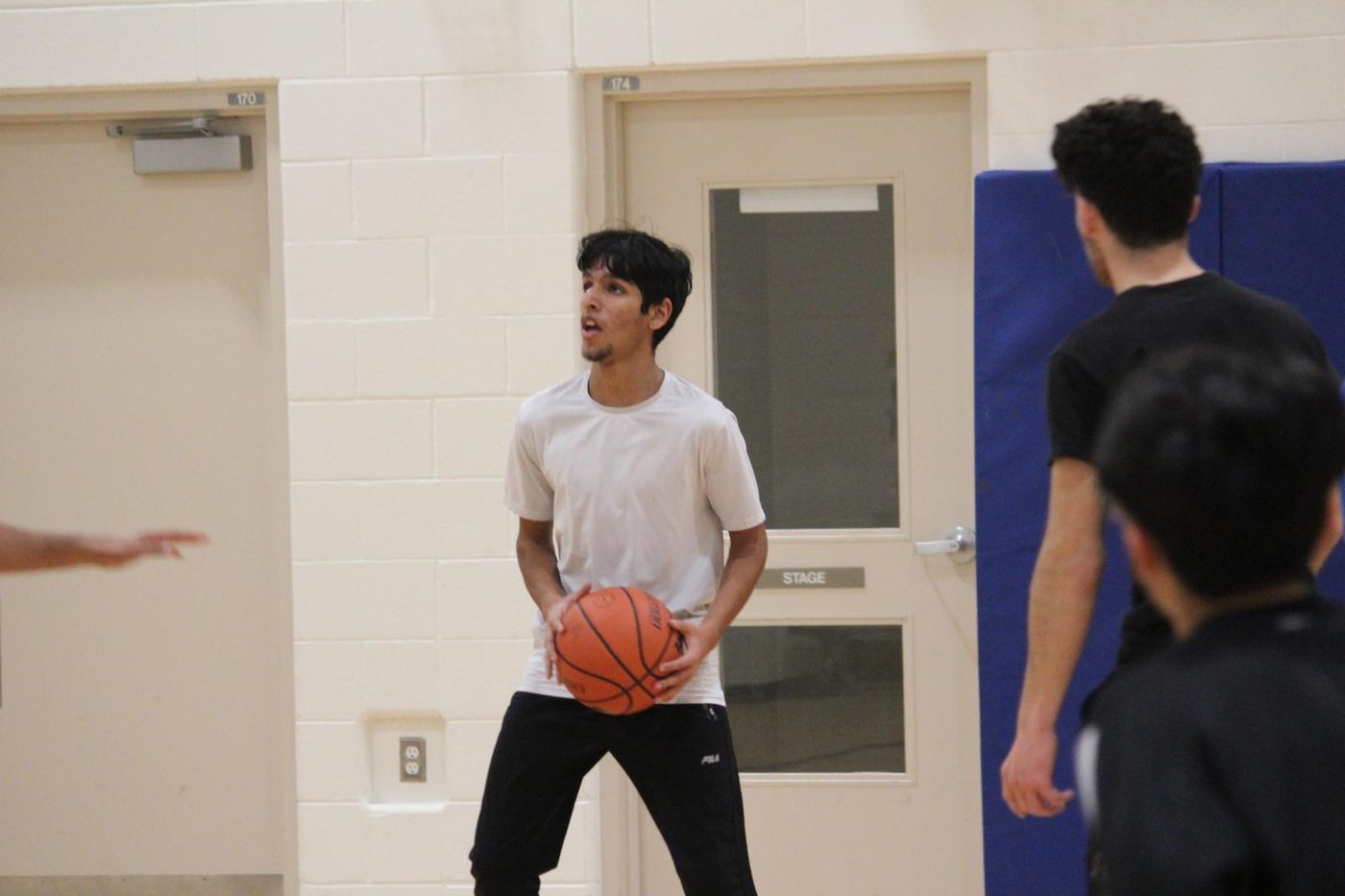
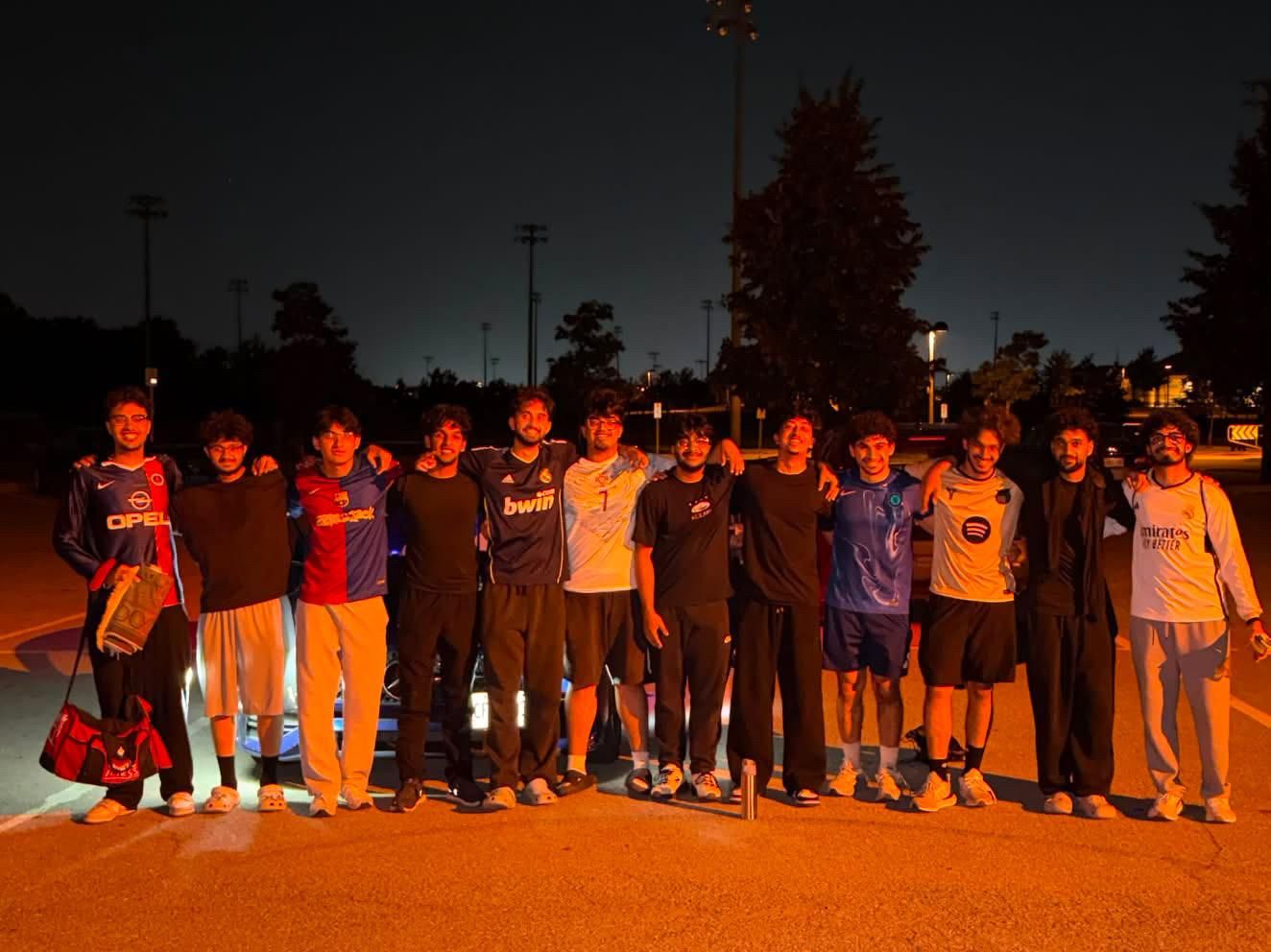
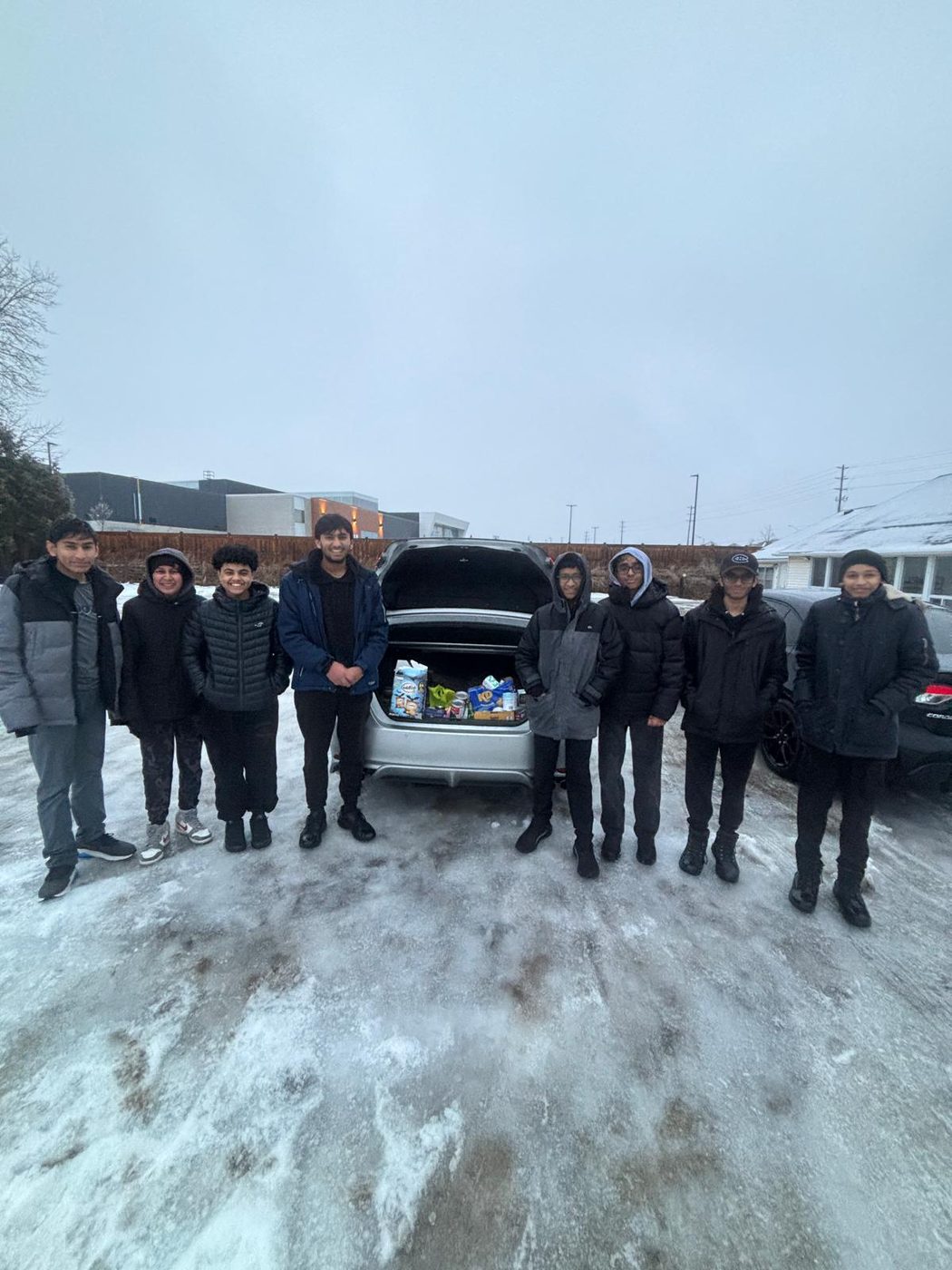
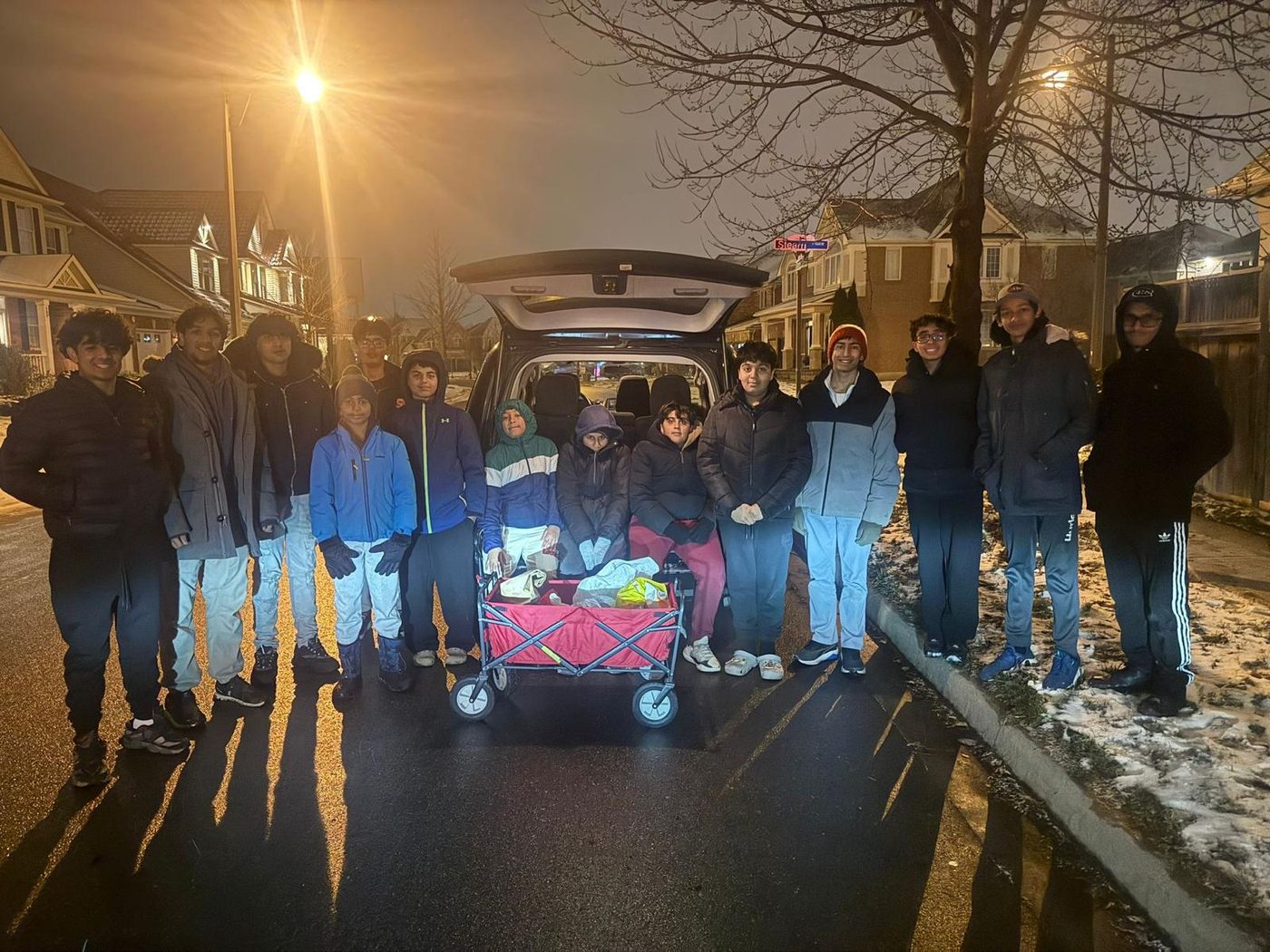
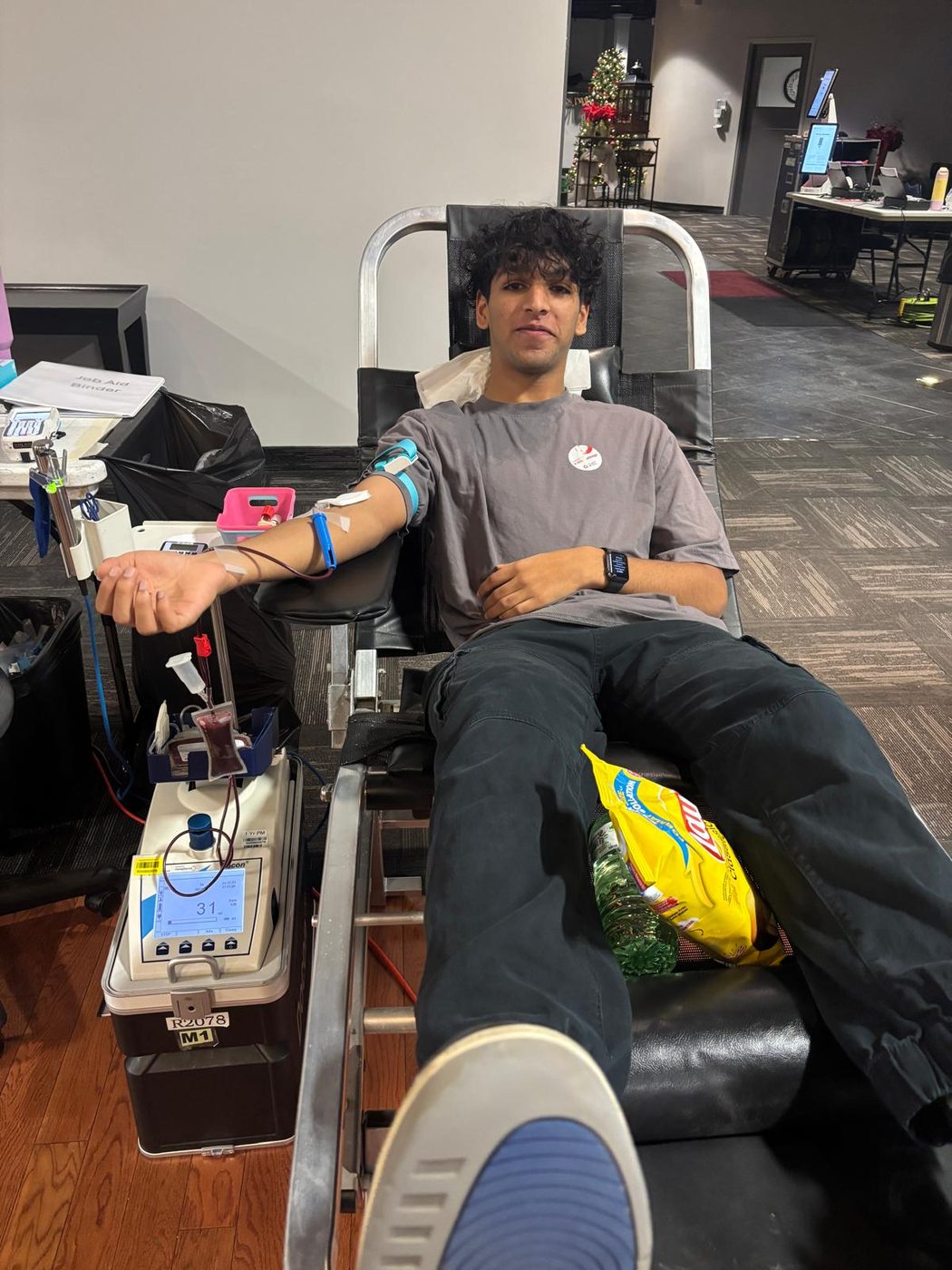
Outside of school, I'm usually playing basketball or volleyball, and I'm always down for a pickup soccer game. I also like getting involved in the community through things like food drives, blood drives, and helping out around the neighbourhood when I can.
Right now, I'm looking for co-op and internship opportunities, especially in hardware, robotics, and embedded software. Keep scrolling if you want to see some of the things I've worked on.
Featured build · BearHacks 2026
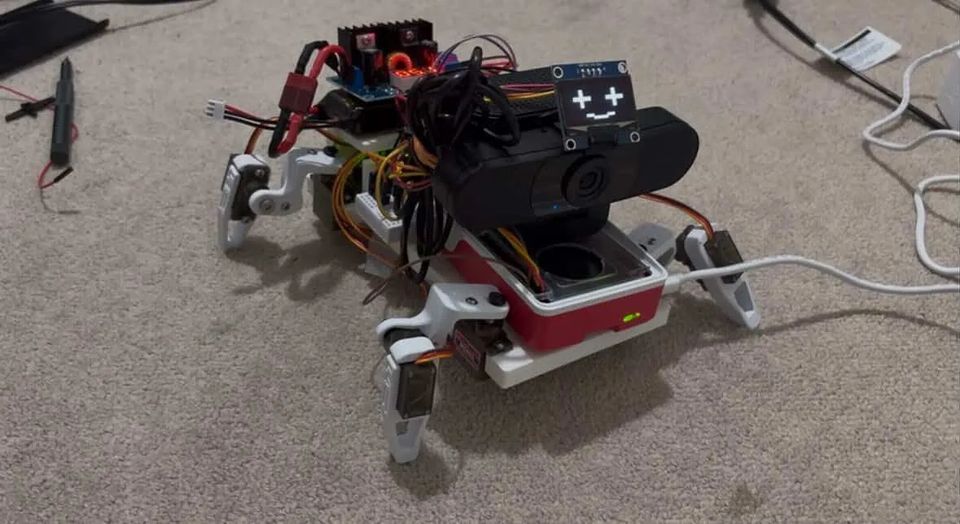
An autonomous quadruped that hears you, looks at the room and decides what to do. Built with one teammate in 72 hours.
This one taught me the most. Click to see how it works.
May 2026 · BearHacks 2026
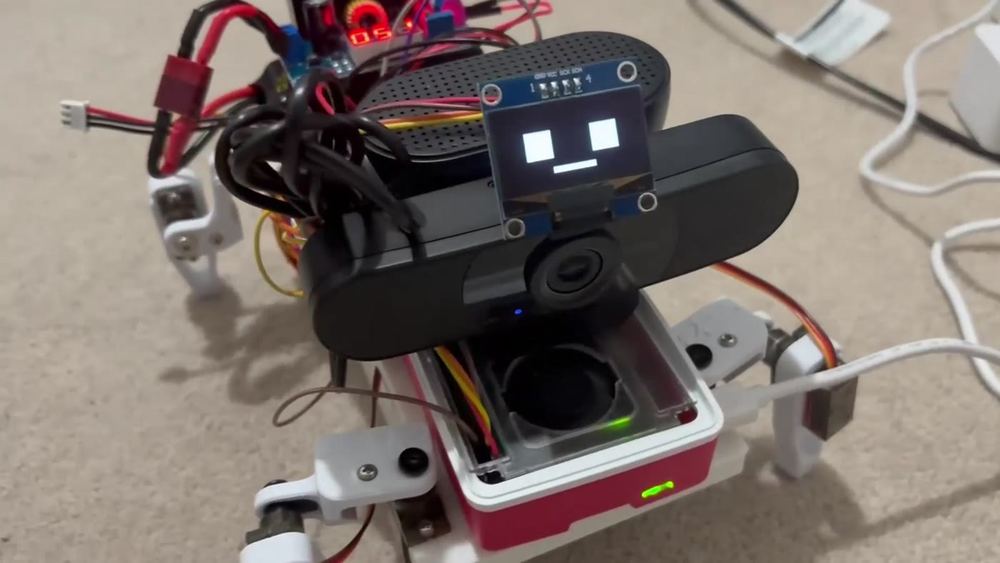
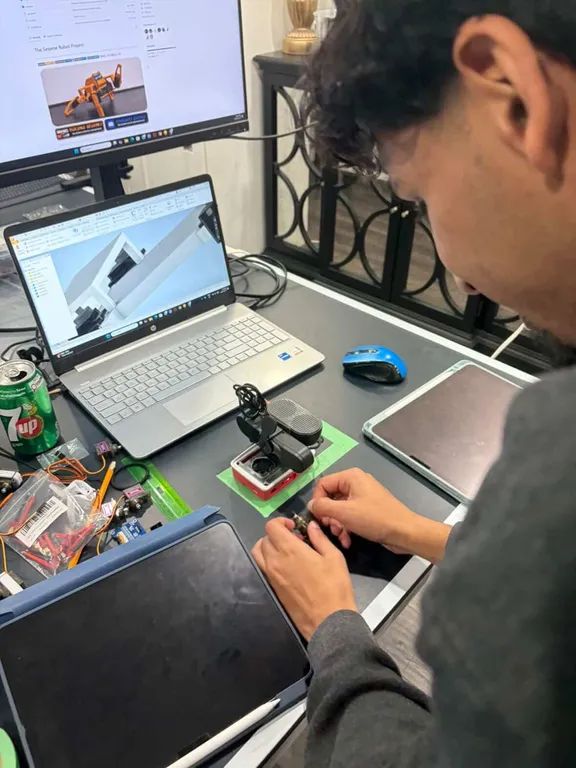
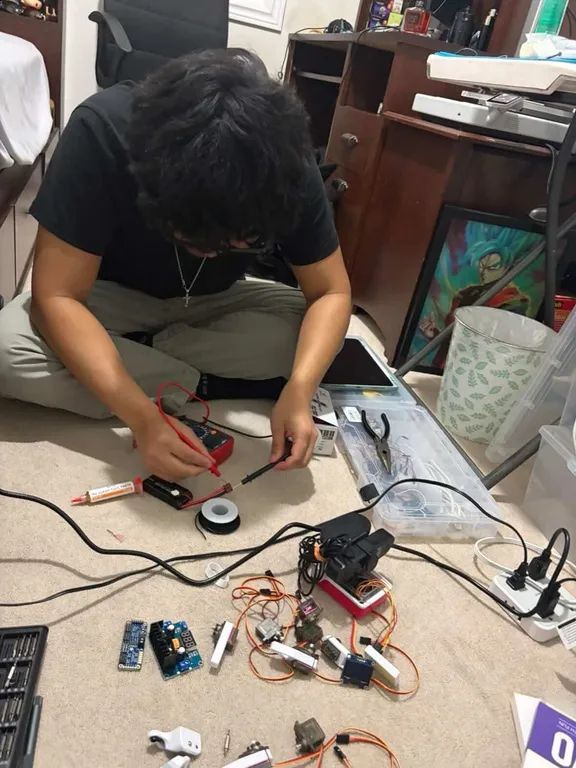
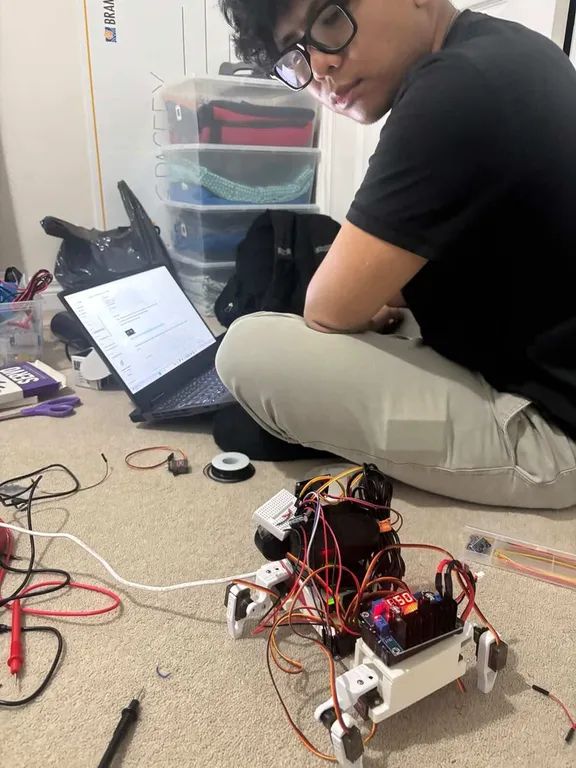
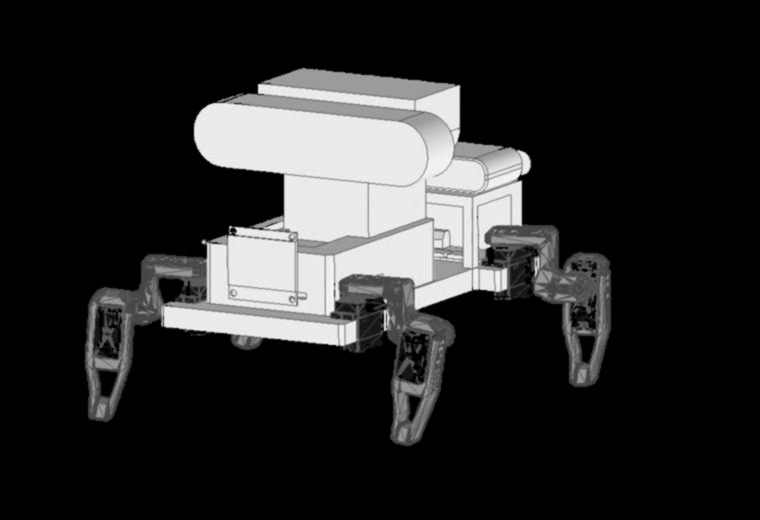
A four legged robot that takes a spoken instruction, looks at the room through its camera and works out what to do next. Speech recognition and object detection both run on the Pi itself, so it keeps working with the Wi-Fi off. My teammate and I had 72 hours, and it was my first hackathon.

March 2026 · McMaster 2TA4
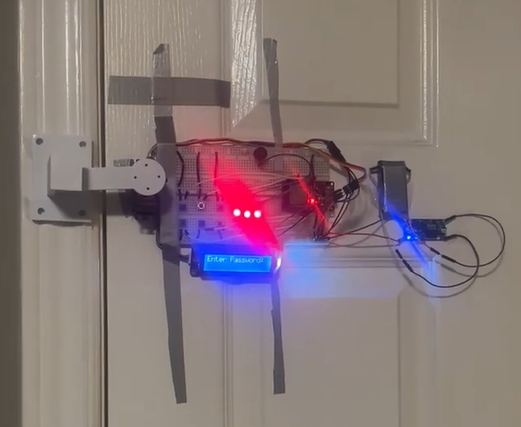
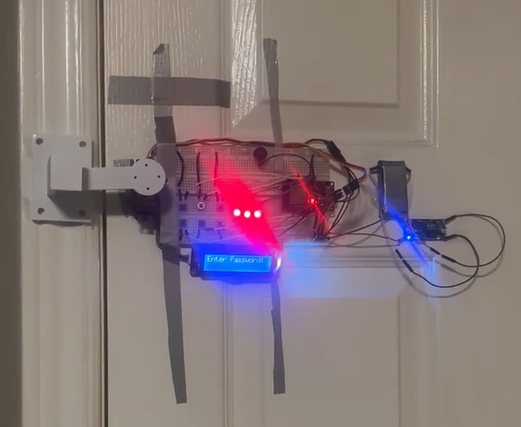
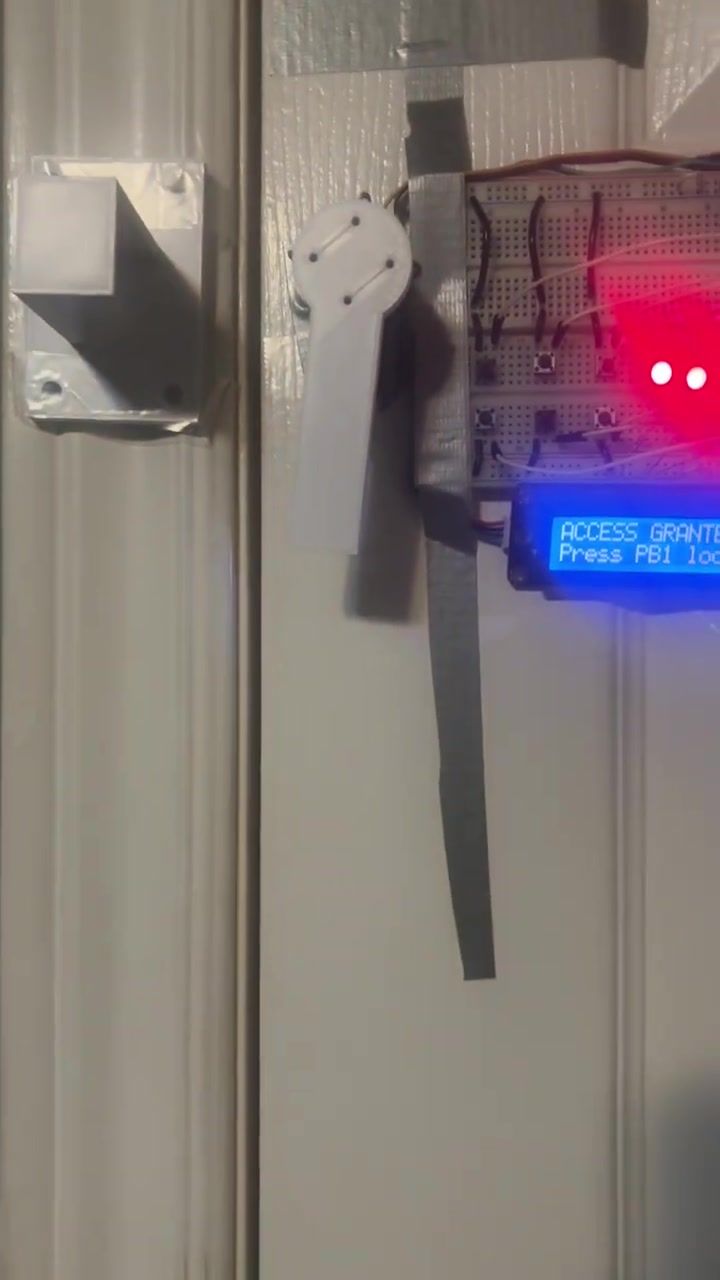
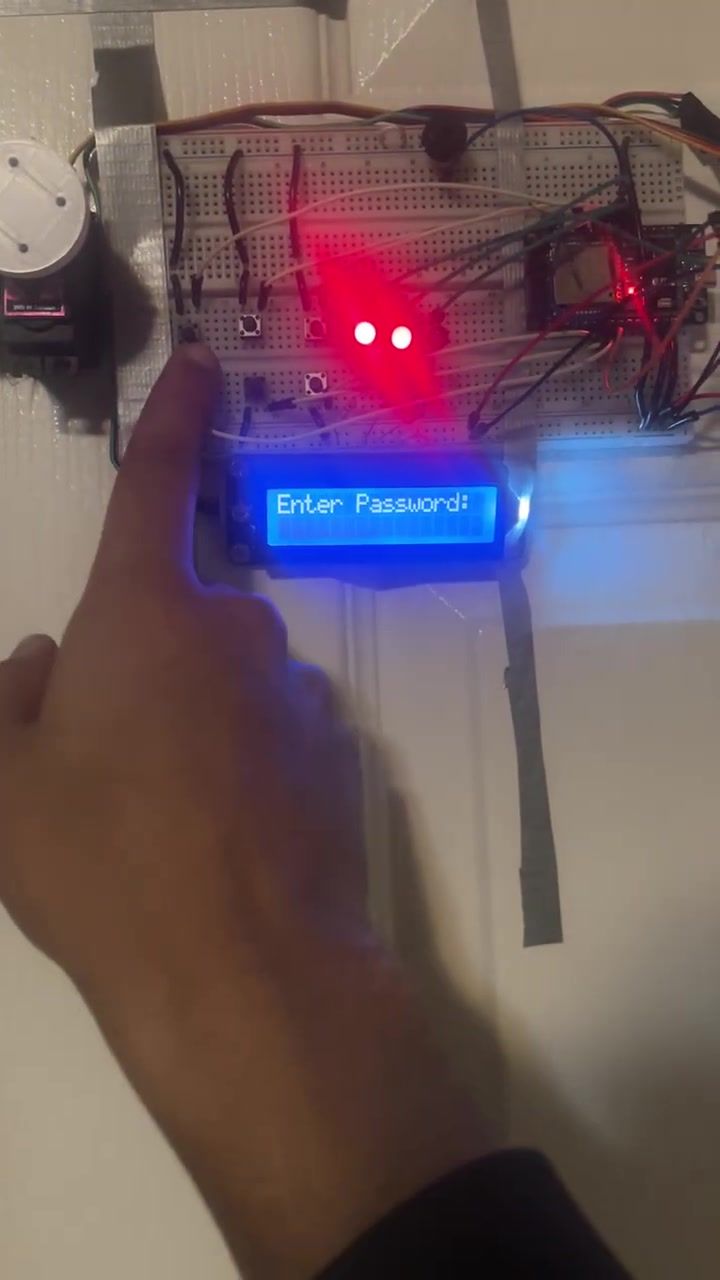
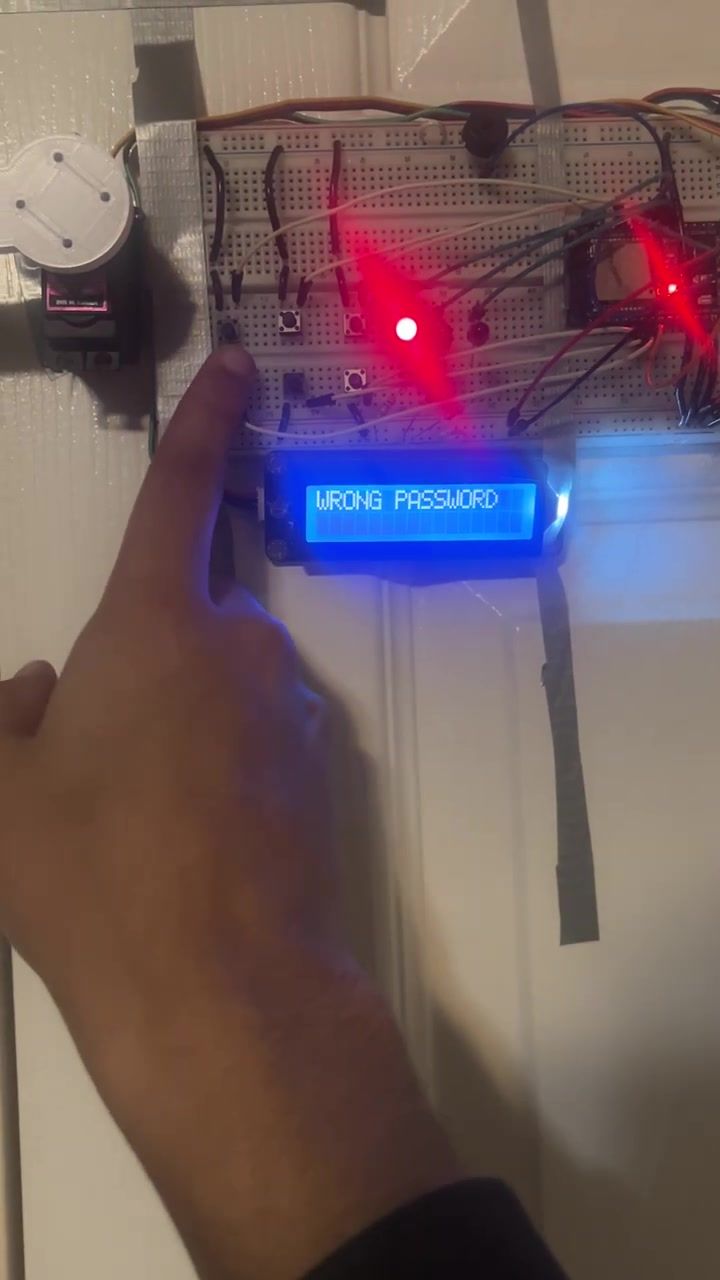
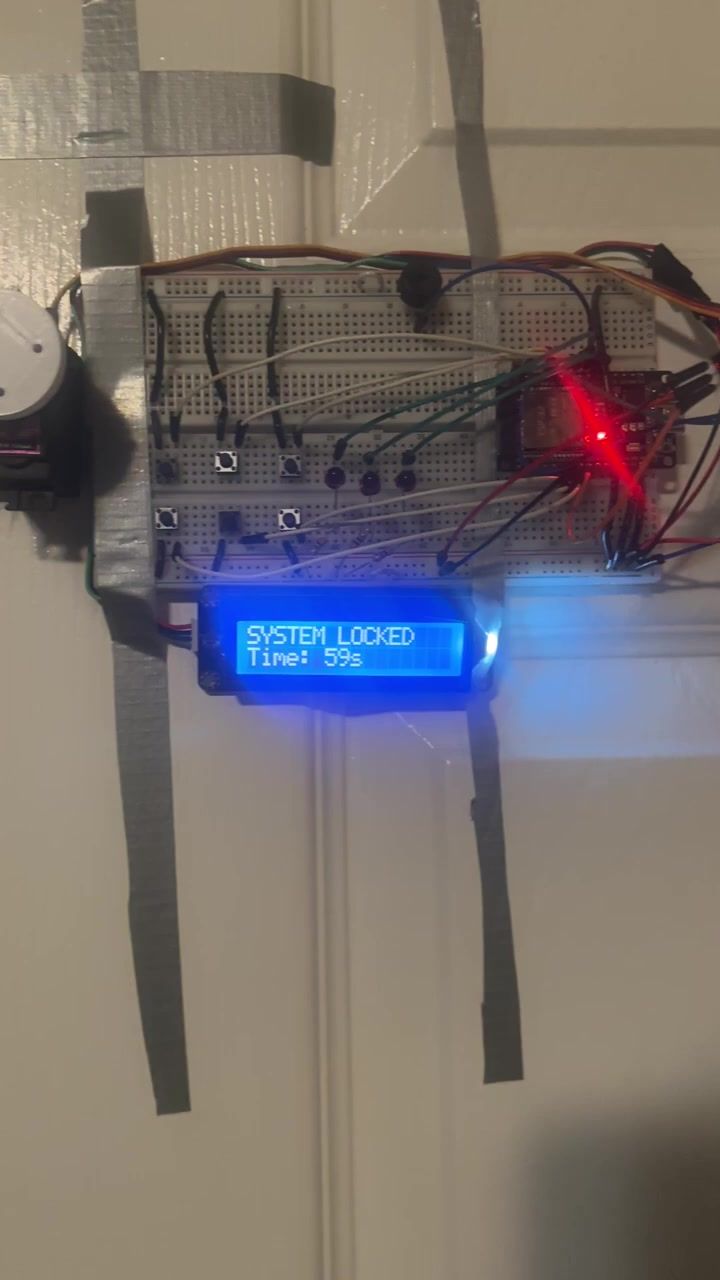
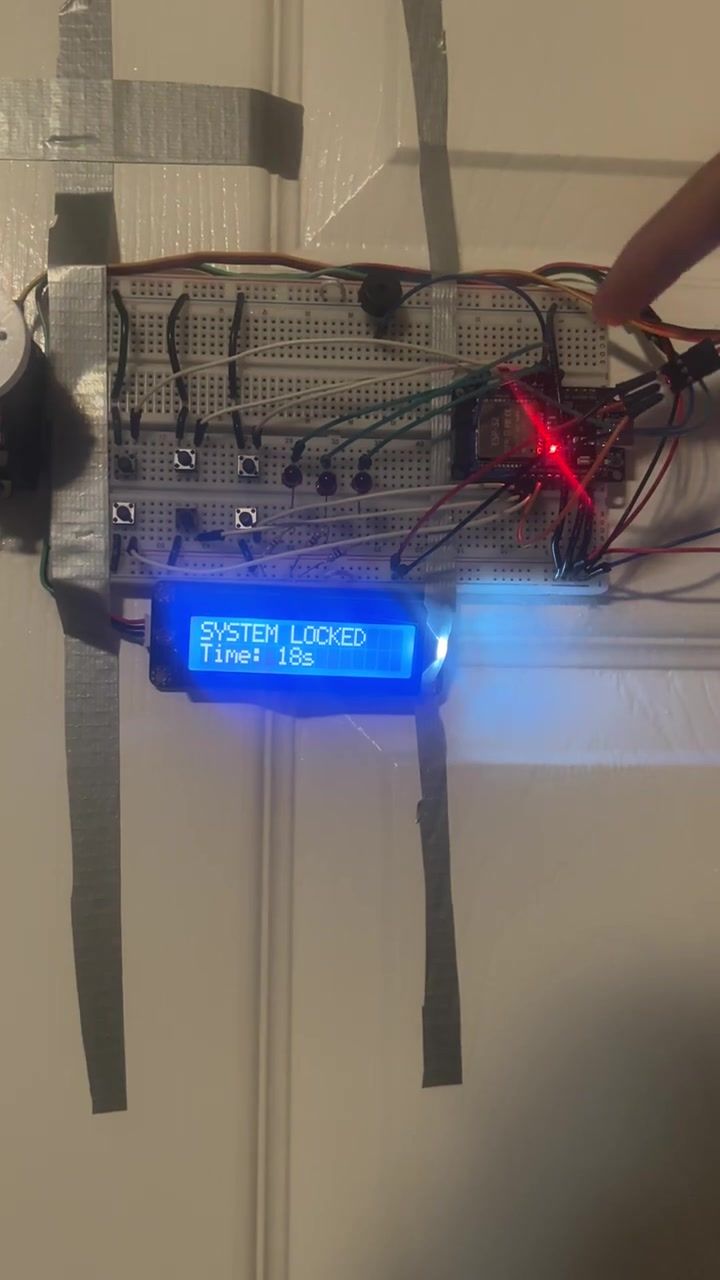
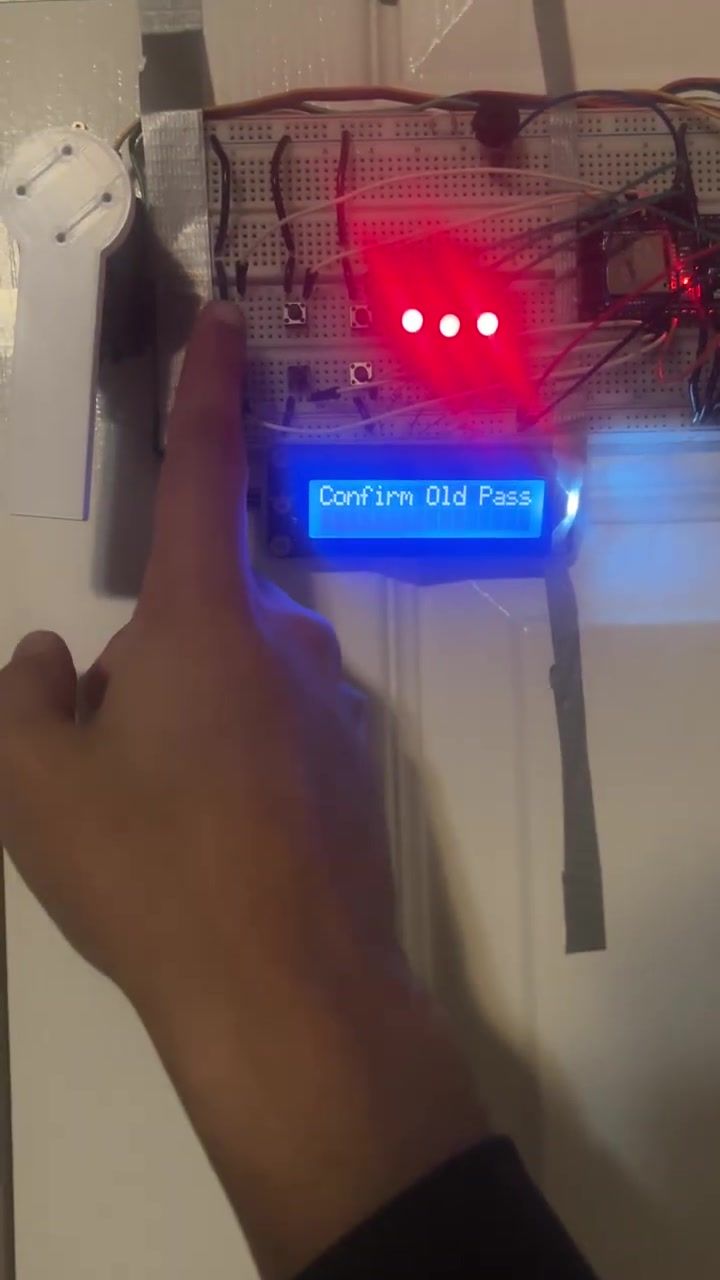
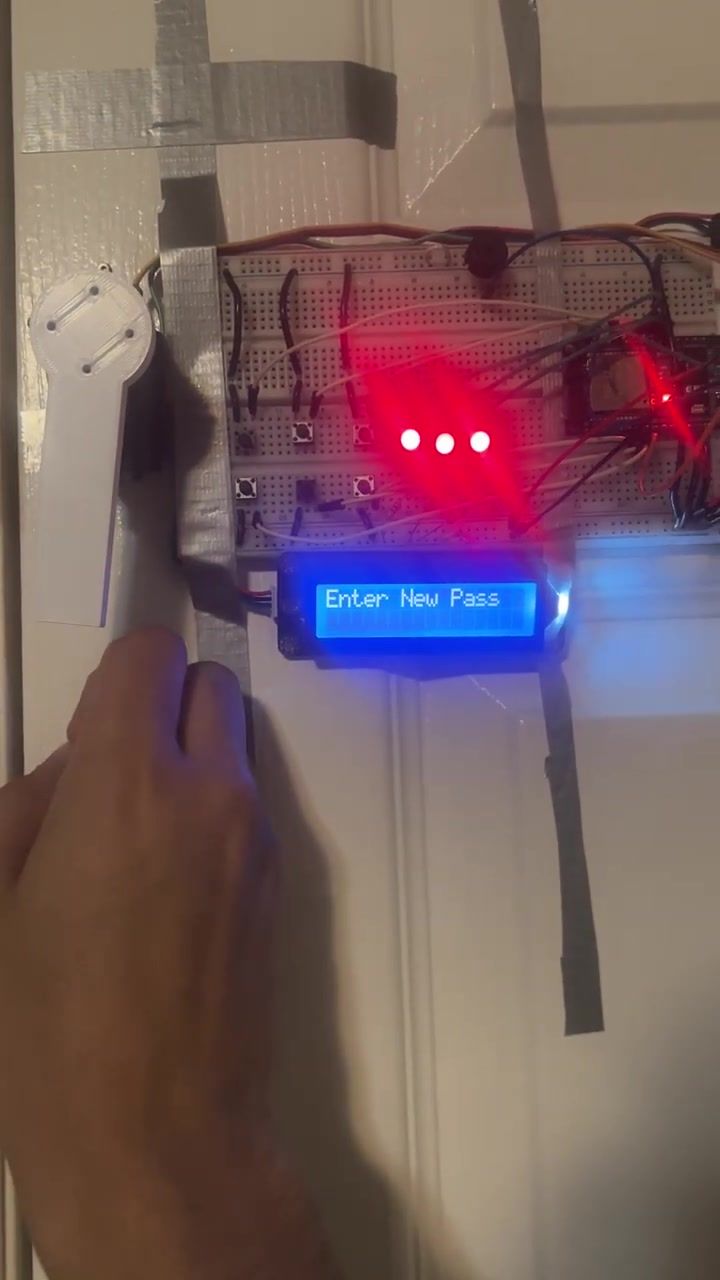
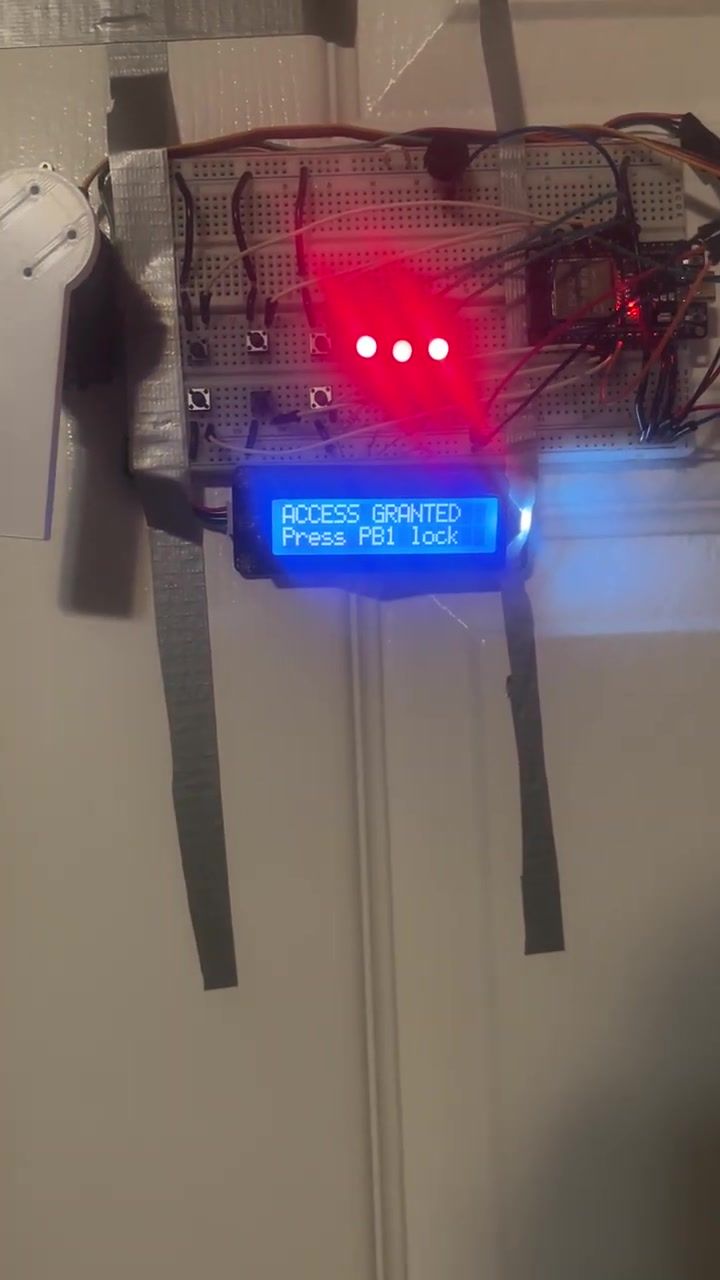
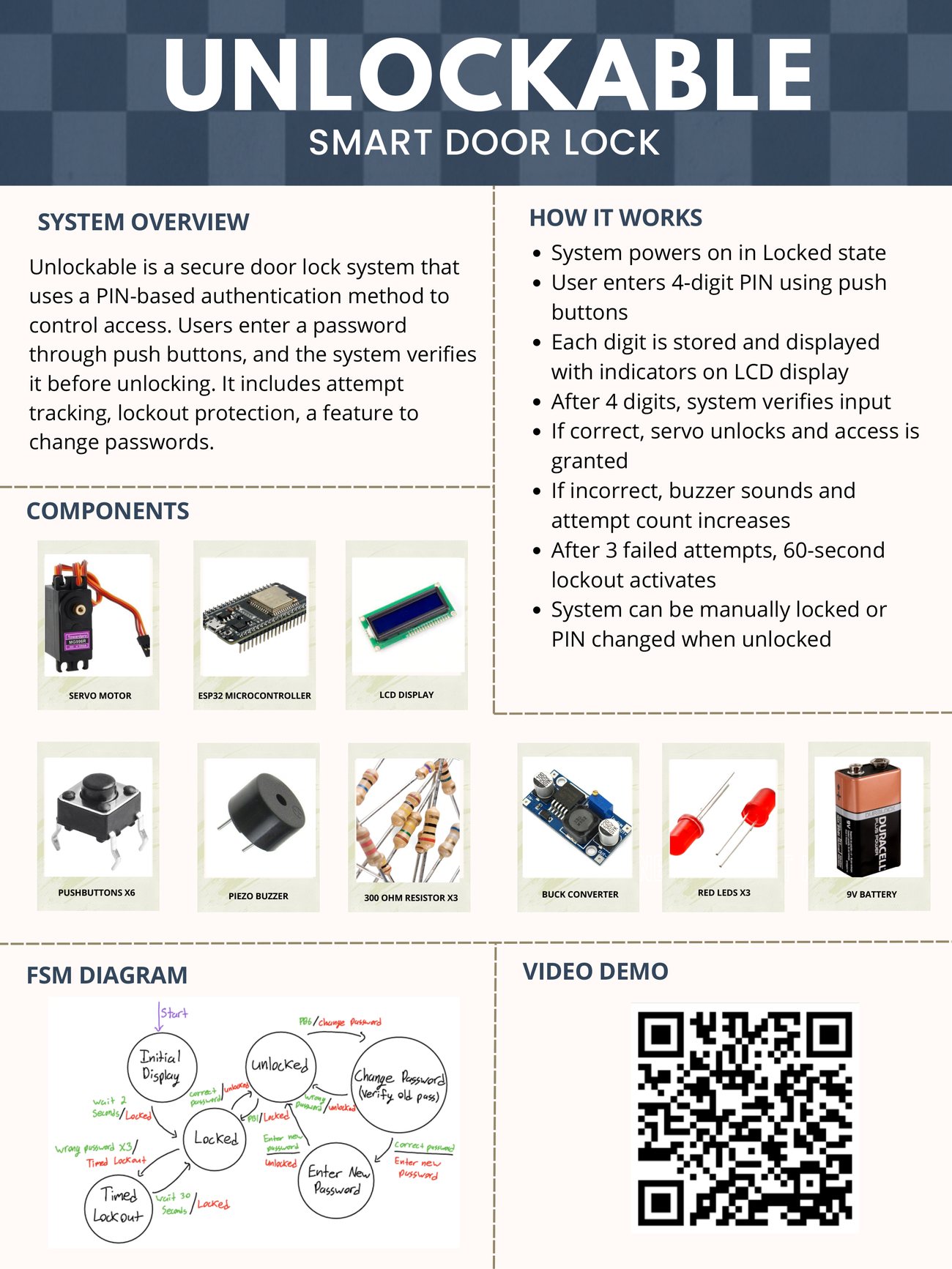
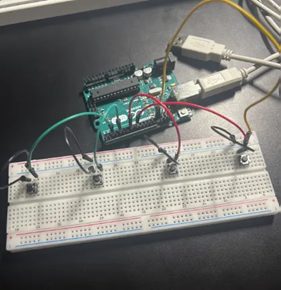
Six buttons, a servo and an LCD wired to an ESP32. Type the right four digits and the latch swings open. Get it wrong three times and the board locks you out for sixty seconds, counting down on the screen. I drew the six states and every transition between them before I wrote a line of firmware, which is why the countdown never blocks the main loop.

Feb to Mar 2025 · McMaster 1P13
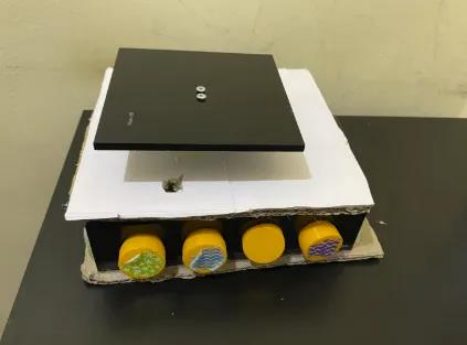
A kitchen scale that says the weight out loud, built over six weeks for a client with combined vision and hearing loss who cooks every day. I owned the button interface: the circuit, the firmware behind the four functions, and the oversized printed caps with different textures so she could tell the buttons apart by feel.
Oct to Dec 2024 · McMaster 1P13
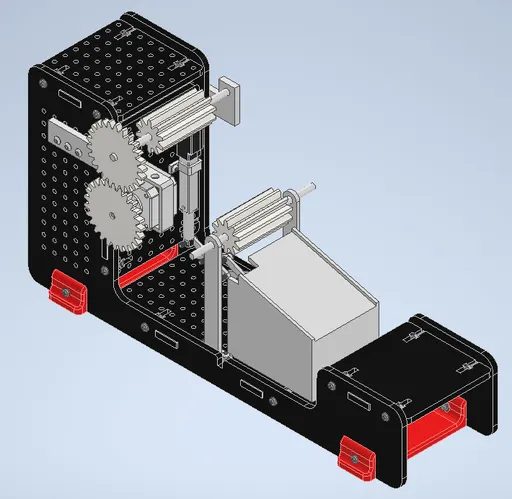
A baggage handling system for a simulated airport, mechanical and software together. My scissor lift ramp made it into the final assembly. On the software side I wrote the time delay function and the code that drove the Q-arm, and I coordinated the team of five.
Jan to Feb 2025 · McMaster 1P13
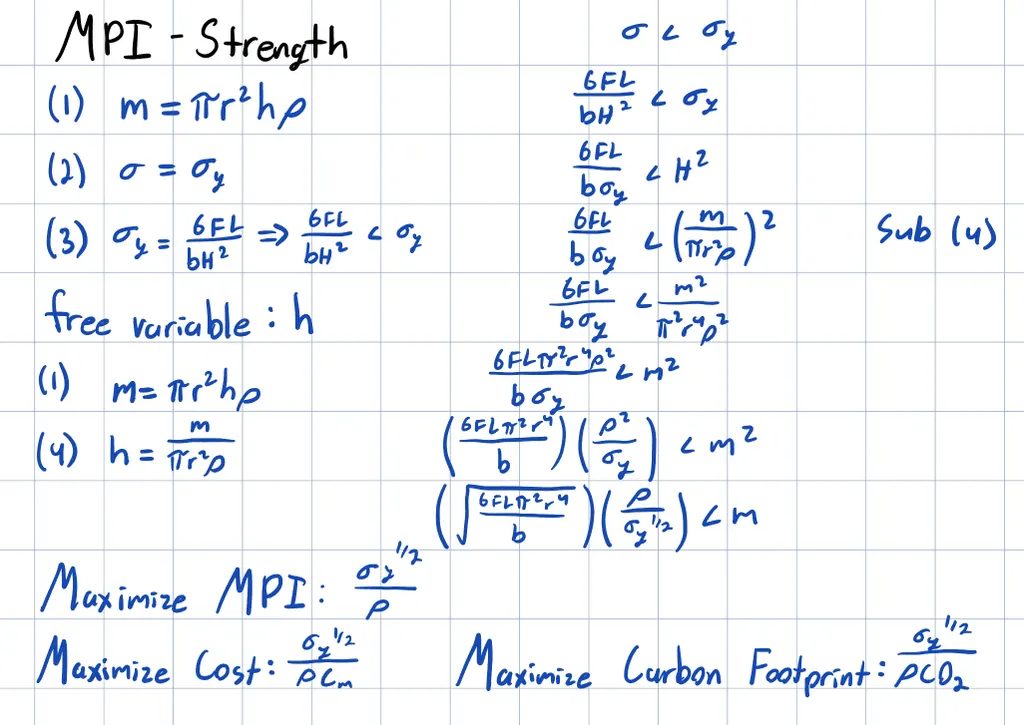
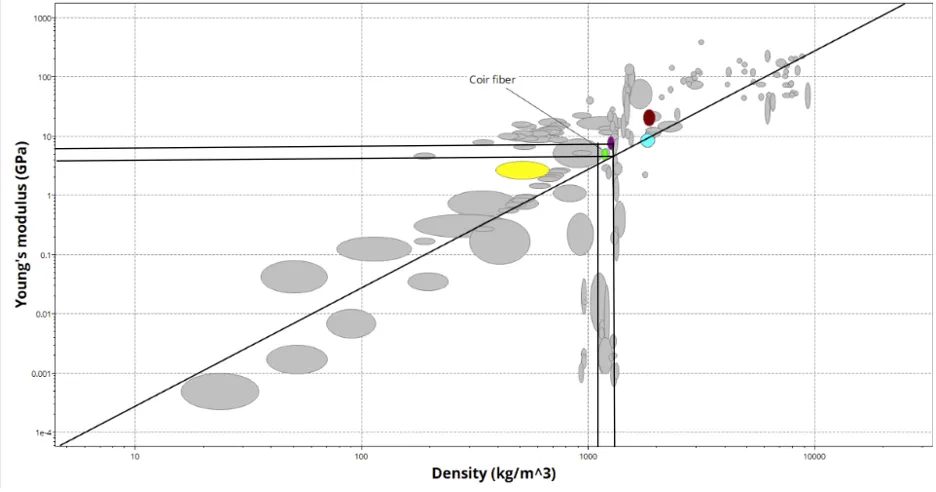
Stripping ciprofloxacin out of hospital wastewater for a rural hospital in Byron Bay, Australia. I ran the material analysis: deriving the performance indices, working out how much porosity coir fibre could take before it stopped being strong enough, and rebuilding the Ashby chart to check my own answer.
iA Auto Finance · Summer 2026
I spent the summer taking apart processes that ran on somebody's memory and rebuilding them so they ran on their own. The payroll one was the big one: INDEX/MATCH, VLOOKUP, macros and validation controls replaced a monthly copy and paste job and saved more than five hours a month.
I also built Microsoft Forms and Power Automate workflows for employee rewards and tuition reimbursement, gave offer letter intake a standard set of templates, and went through Teams and SharePoint permissions clearing out access nobody needed. It added up to roughly 11 hours saved every month.
Oxford Learning Centres · May 2025 to now
I teach math and science in groups of three, across the Ontario, AP and IB curricula. The part I did not expect to matter is how differently three students in the same room can need the same idea explained.
I write the lesson plans and the test review material myself, aimed at what students actually get tested on rather than at covering the whole book.
Milton IB Tutors · 2023 to 2025
A friend and I started a tutoring business for grades 1 to 12 in the Ontario and IB curricula, and ran it for close to two years. It grew to more than 12 active students.
Teaching was the easy half. Invoicing, scheduling, finding clients and keeping them was the half that taught me something, and it is the reason I am comfortable running my own projects now.
Away from the bench
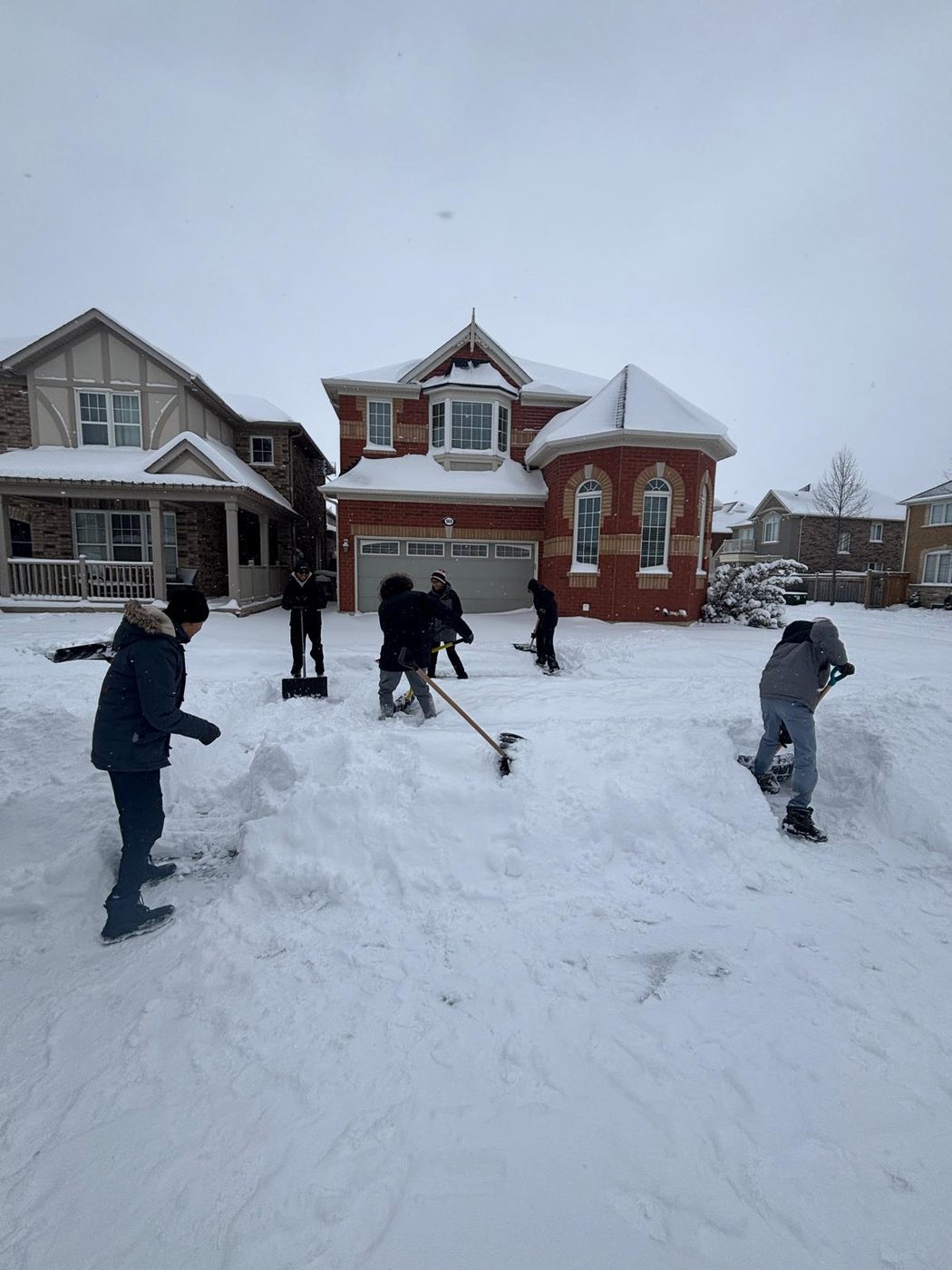
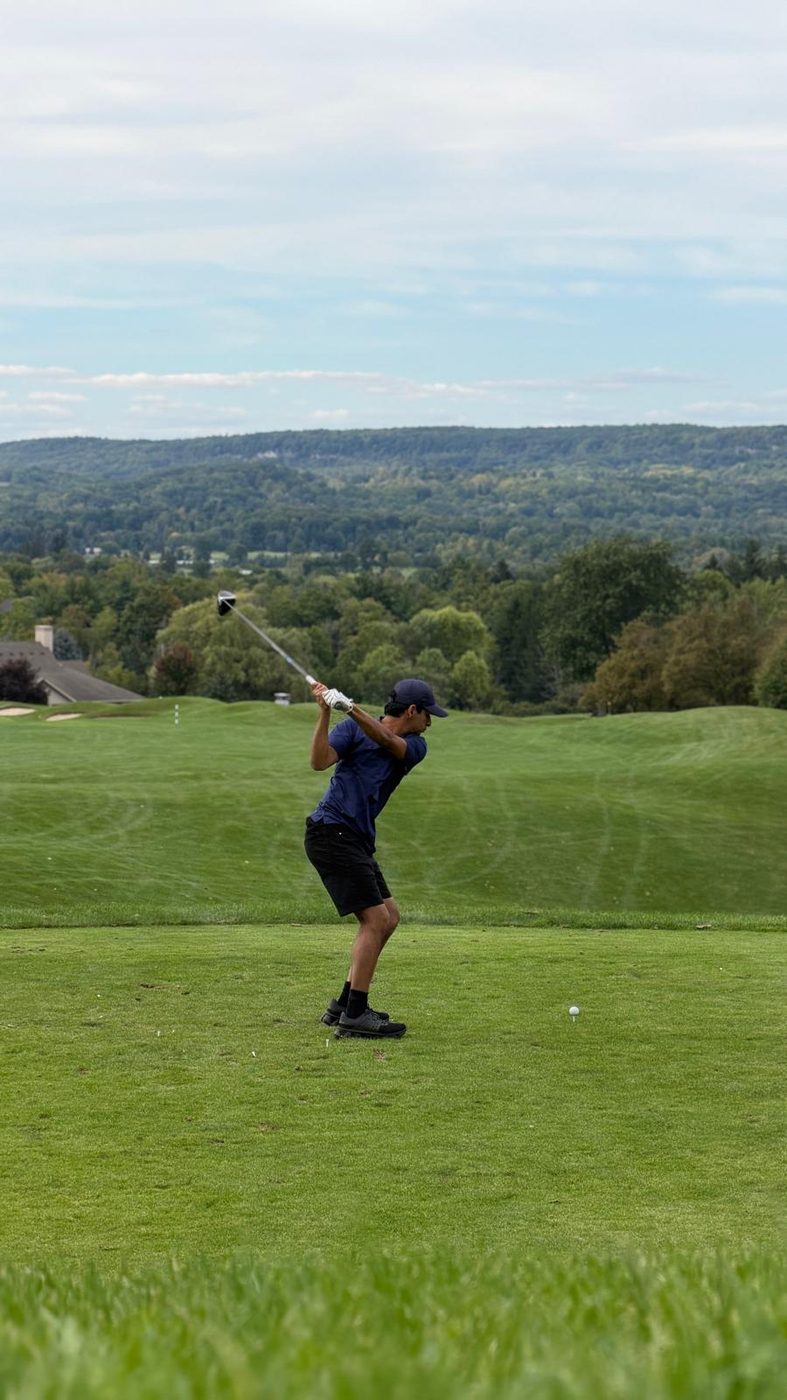
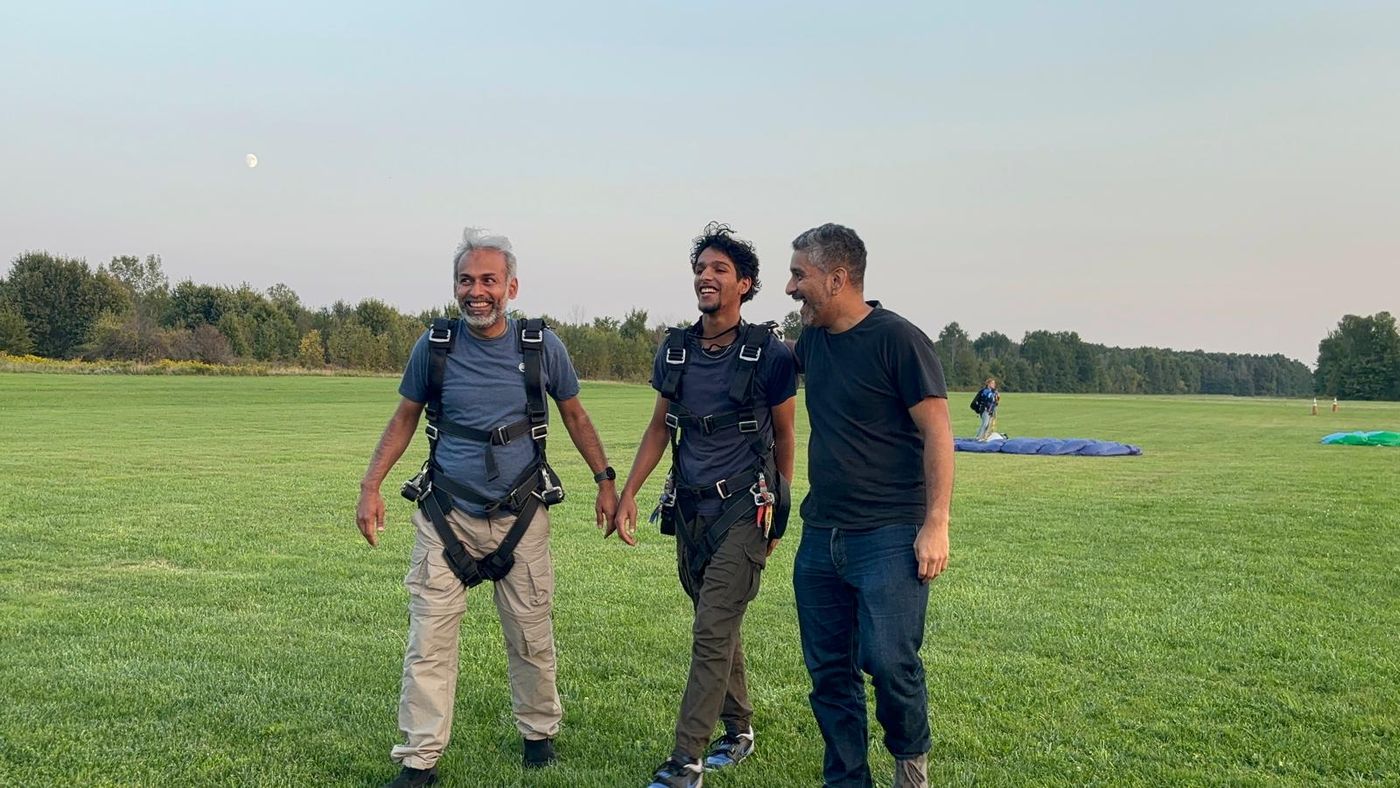
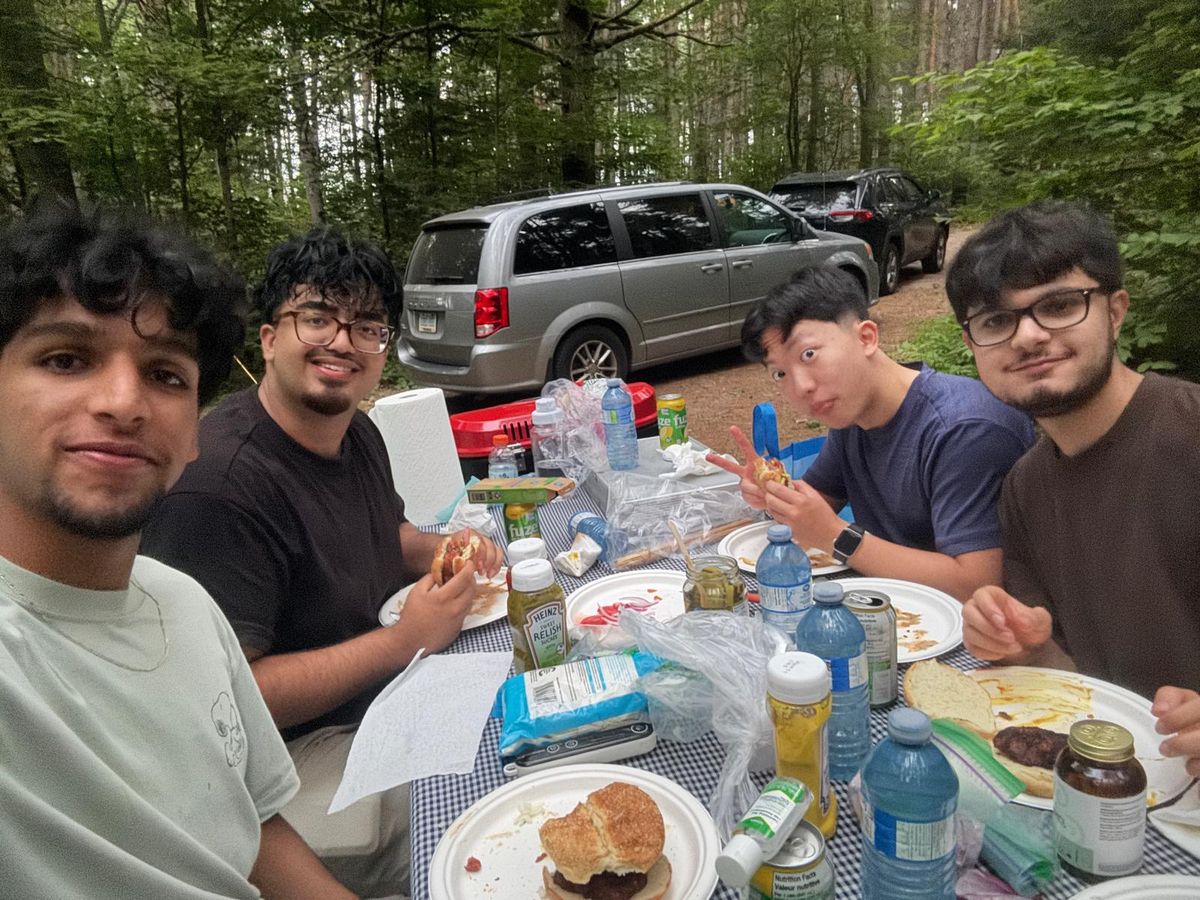
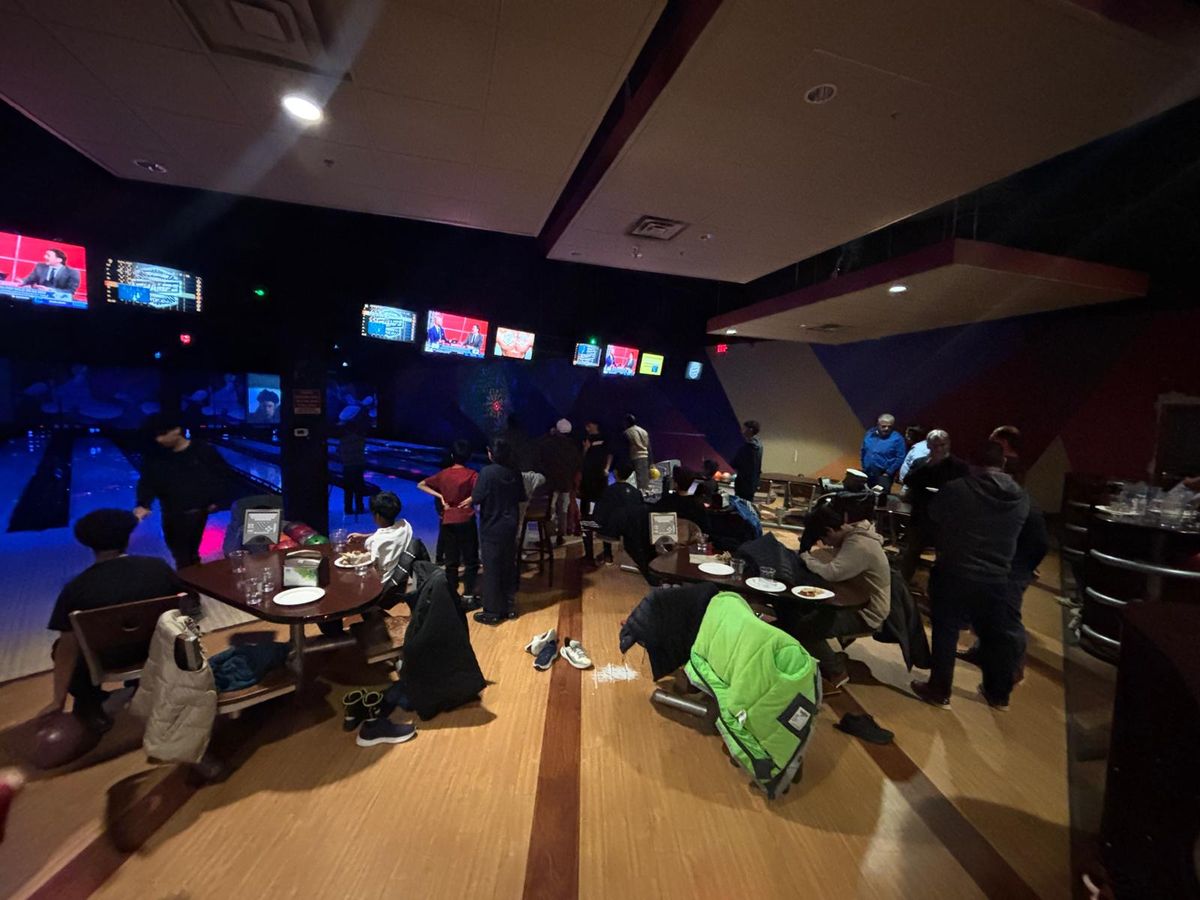
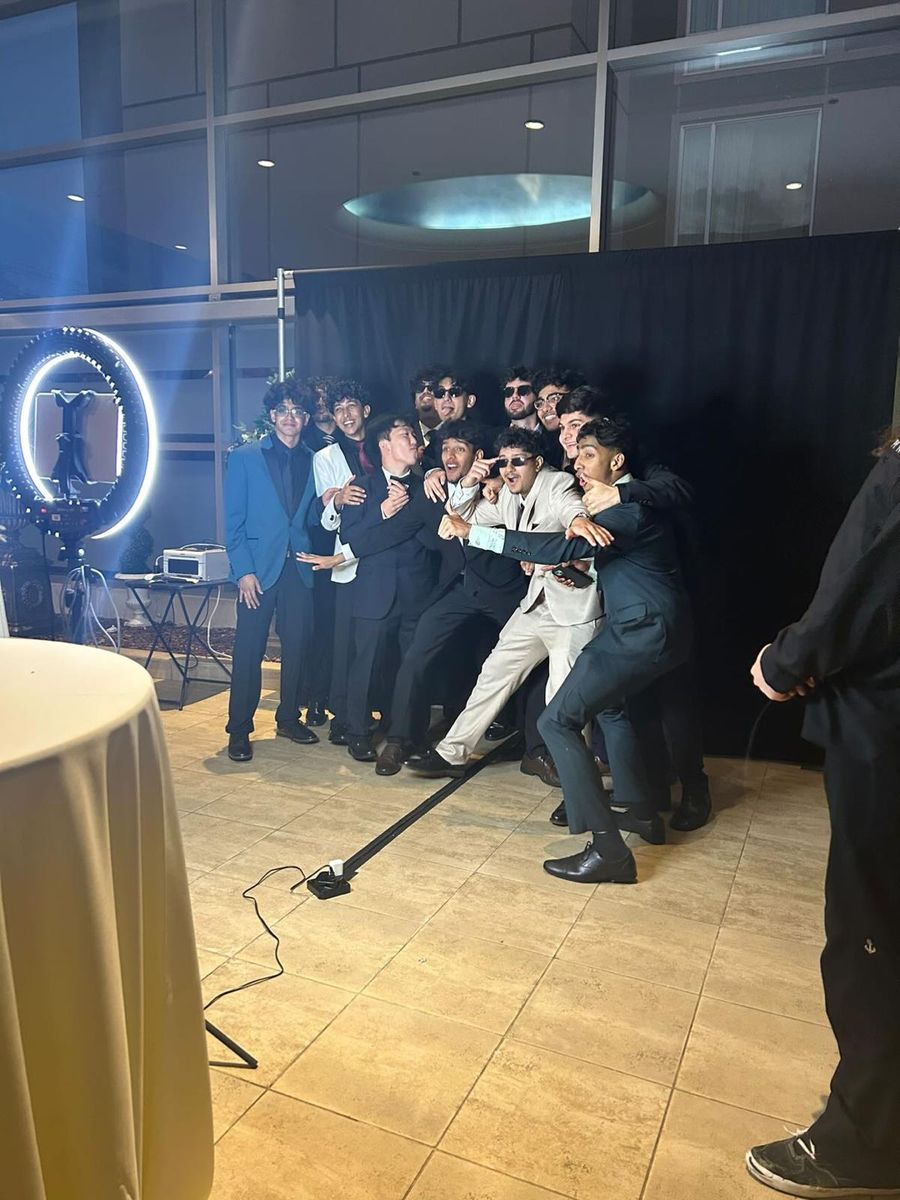
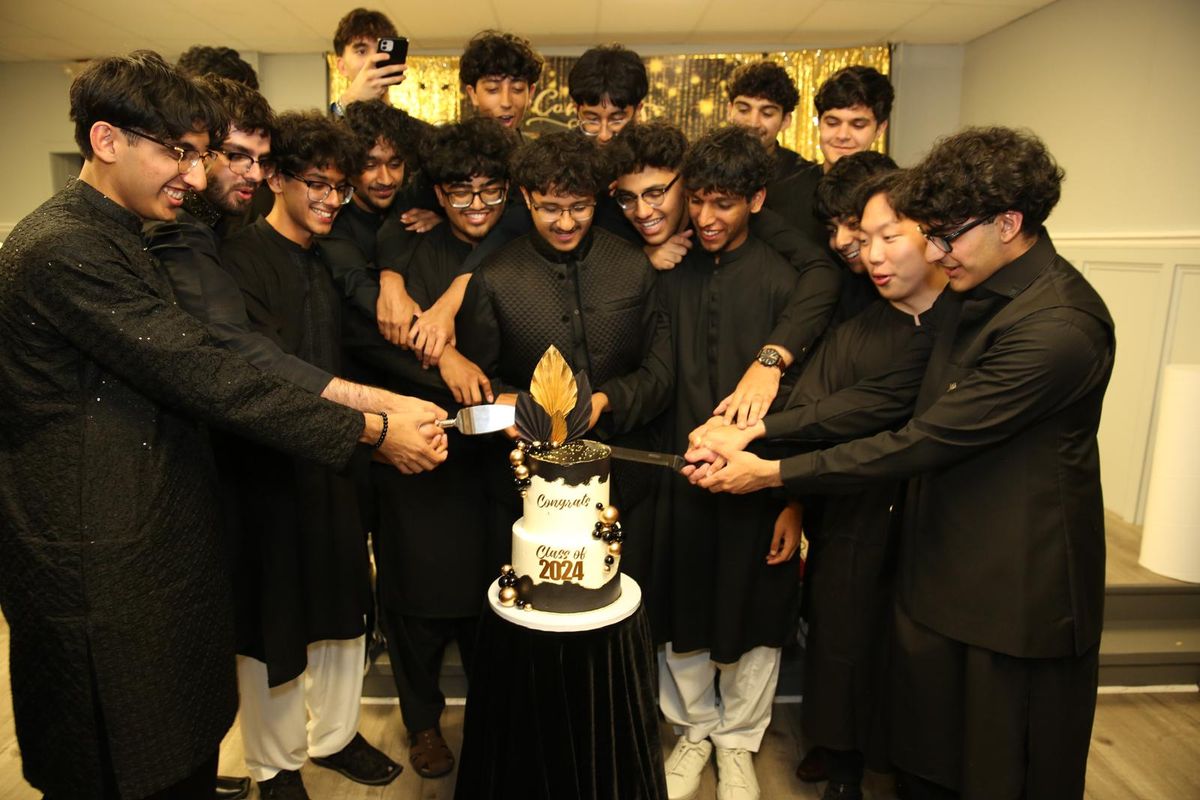
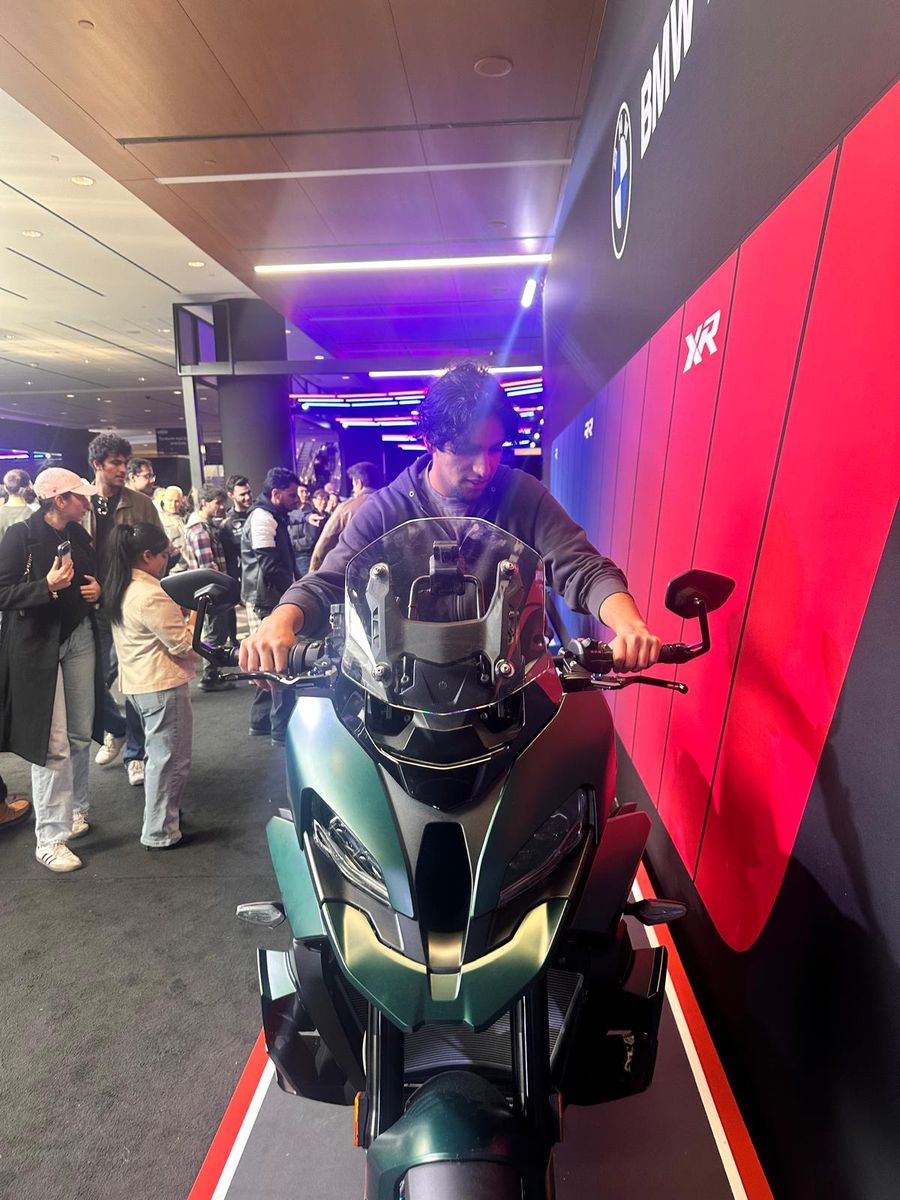
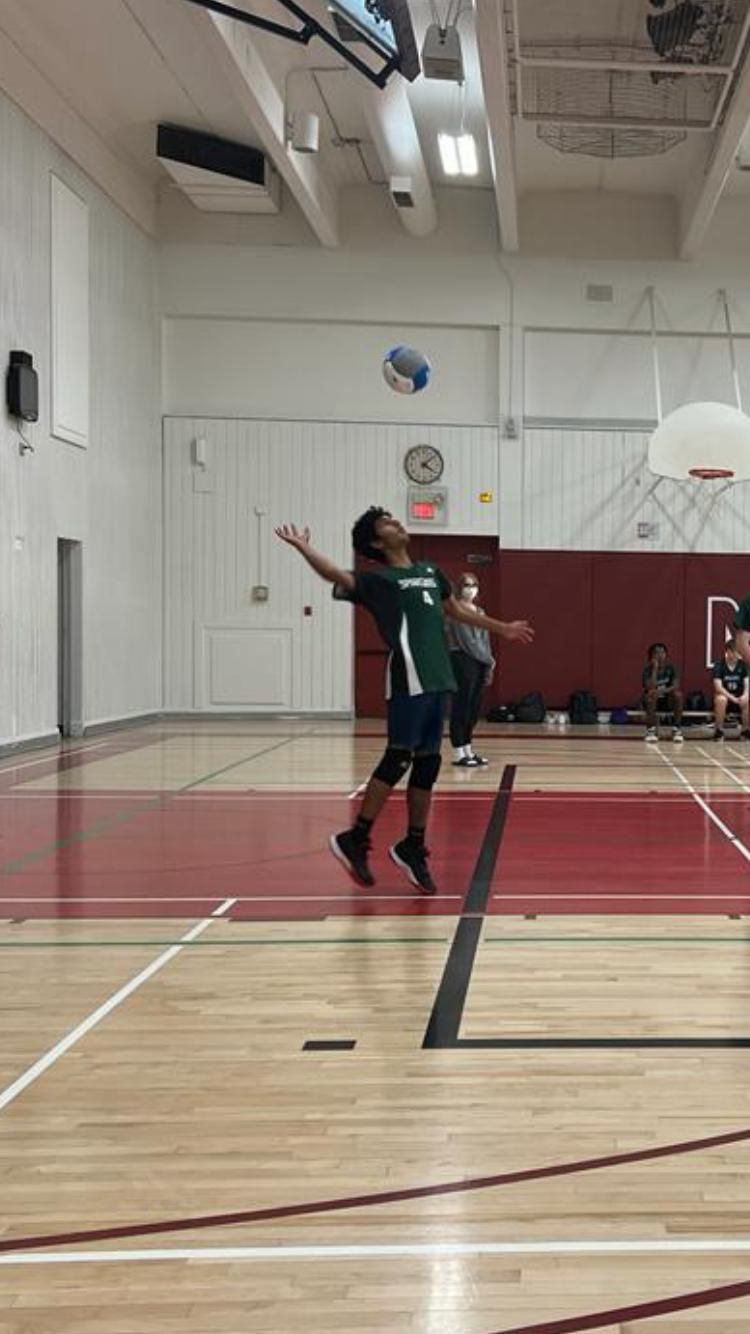
Basketball and volleyball most of the year, soccer with whoever is free, and golf badly. A lot of weekends go to things my community runs: food drives, blood drives, digging driveways out after a storm. The rest of the time I am camping, travelling, or being talked into something like jumping out of a plane.
Get in touch
I'm looking for co-op and internship work in embedded systems, robotics and automation.
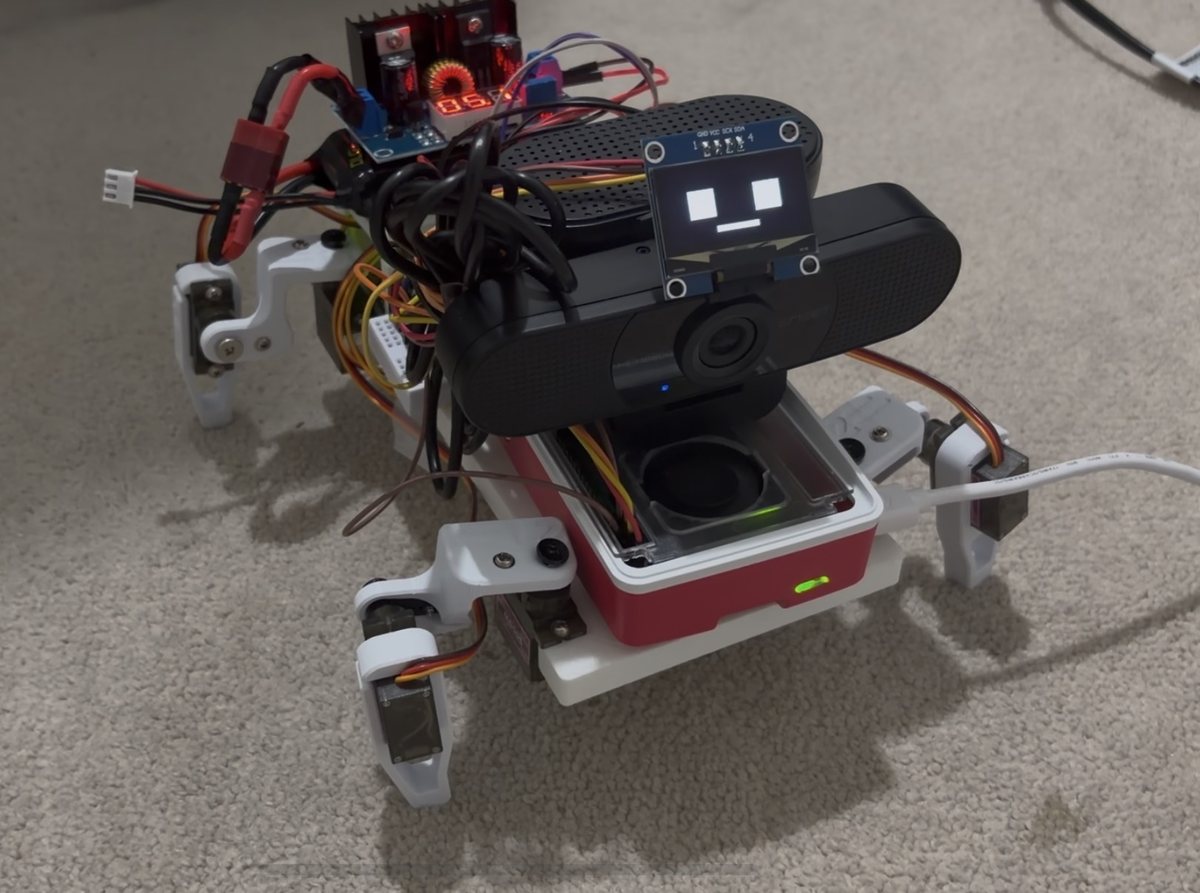
BearHacks 2026 · May 2026 · 72 hours
An autonomous quadruped that hears you, looks at the room, and decides what to do.
Python · Raspberry Pi · OpenCV · Whisper · Autodesk Inventor

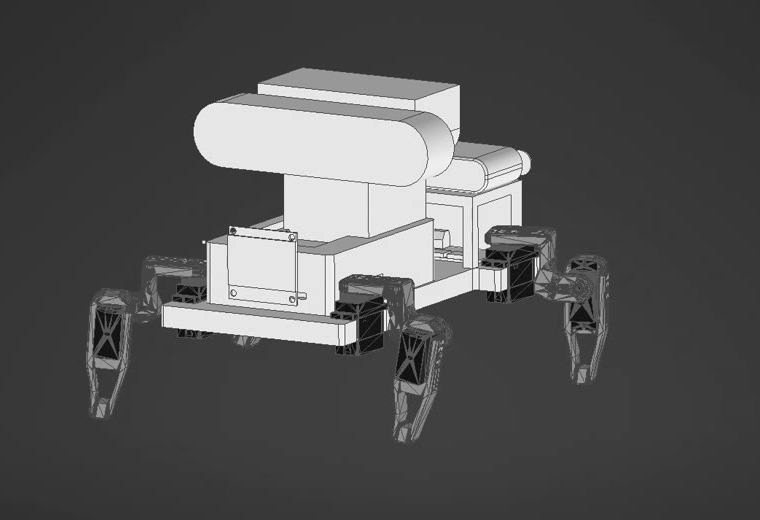
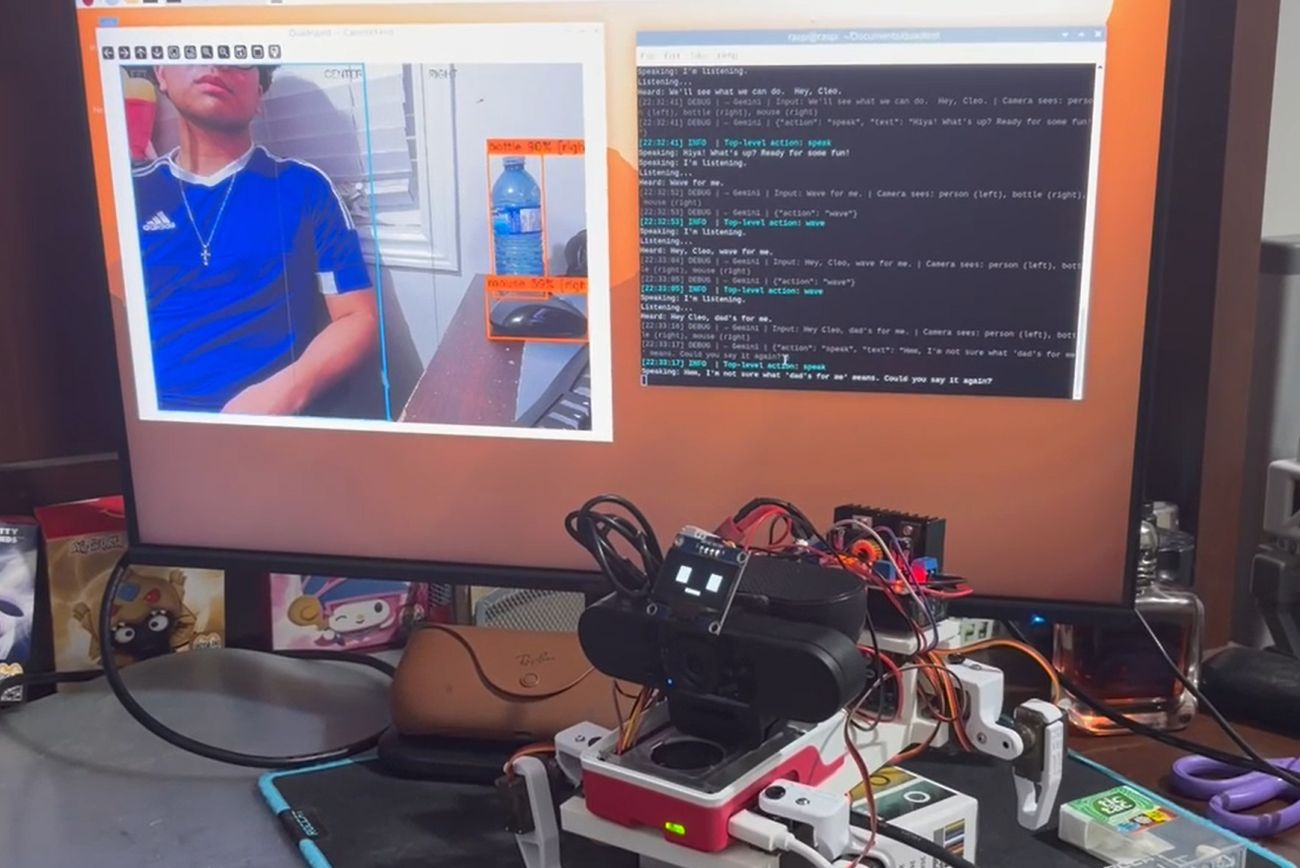
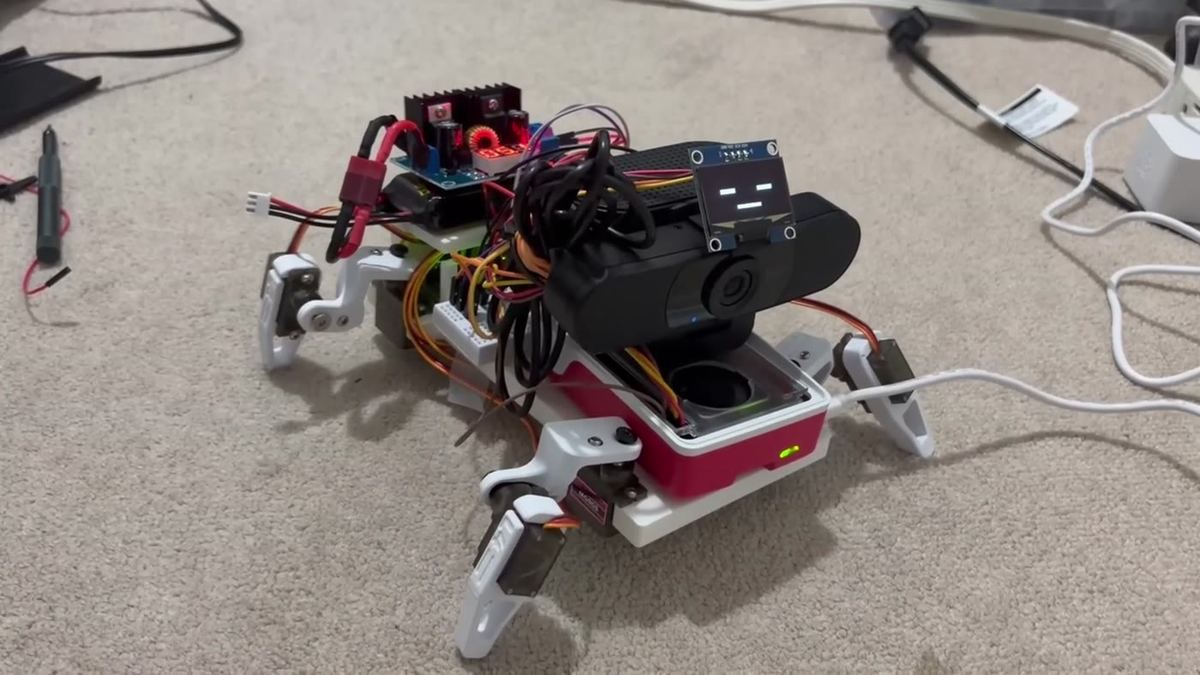
You talk to Cleo and it answers, then acts. A USB microphone picks up the instruction, Whisper turns it into text on the Pi itself, and a camera frame goes through an object detector at the same time. A language model takes both and returns the next action as structured output, which the gait code turns into movement across eight servos.
Everything in that loop runs on the robot. The speech recognition is offline and needs no API key, and the object detection runs locally. Unplug the network and Cleo still hears you and still walks.
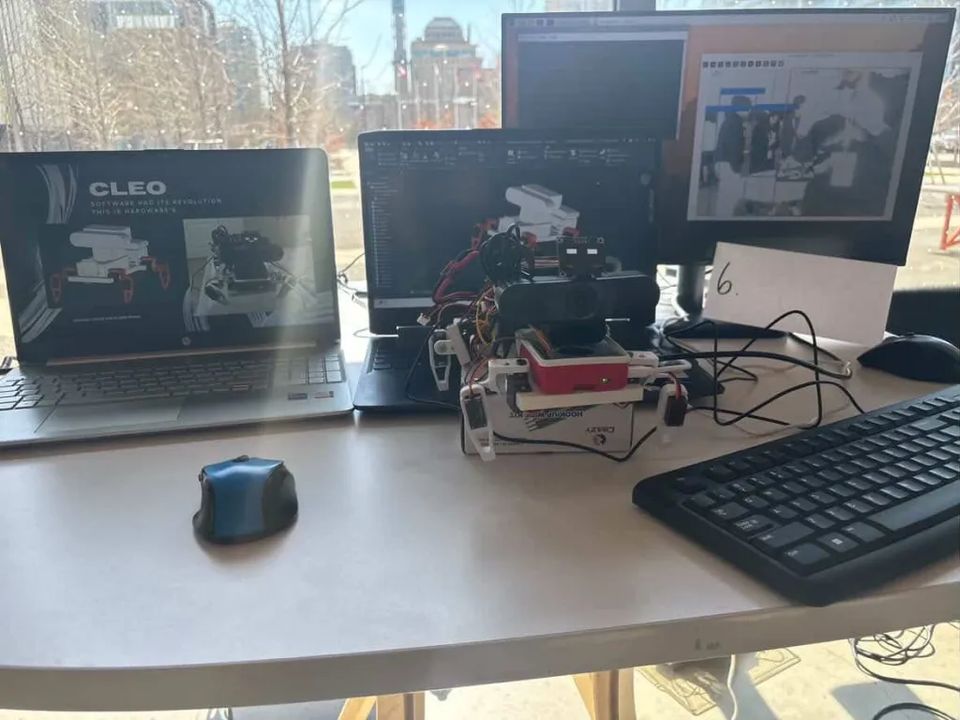
We started with nothing printed and no code written. What follows is roughly the order it happened in.
The interesting engineering is in how those two inputs meet. The camera does not tell the model what is in the room in pixels. It runs MobileNet SSD locally, reduces the frame to a list of labels and rough positions, and hands over something like "person, centre; bottle, right". The model gets that alongside whatever you just said, and returns one action.
Keeping the vision output small is what made the whole thing fit on a Pi. A description of the scene is a few dozen characters. An image is a few hundred kilobytes and a round trip we did not have time for.

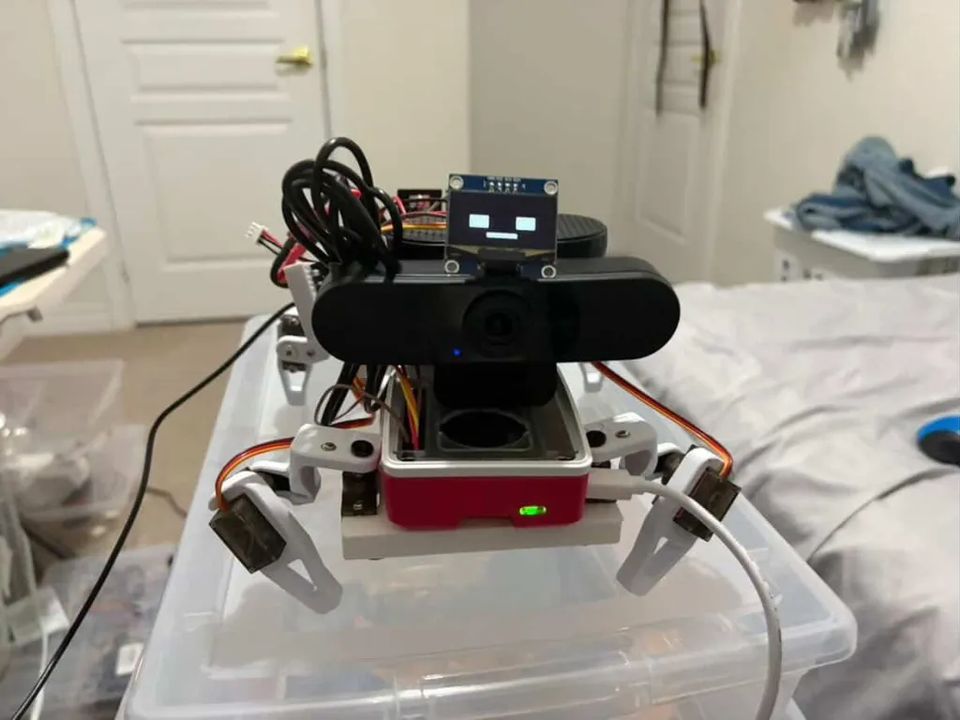
A small OLED on the front shows a face that changes with what the robot is doing: idle, thinking, searching, happy, surprised. Each state has several variants that cycle at random, so it never looks the same twice in a row.
It sounds like decoration and it is the most useful thing we built. Speech recognition takes a second or two on a Pi, and in that gap a silent robot looks broken. A robot with a thinking face looks like it is thinking. People stopped repeating themselves once the face went in.


Cleo scans for attached sensor modules at boot and starts in whichever mode matches what it finds. You can switch at any time by saying so, because the language model reads the intent rather than matching a fixed phrase. Saying "go into security mode" and "keep an eye on the room" both land in the same place.
There is also a manual mode for demos, driven from a keyboard with a live annotated camera window: W to step forward, A and D to turn, space to ask what it currently sees. That mode exists because a hackathon judging table is a bad place to rely on voice recognition.
Whisper takes a second or two on a Pi after you stop talking, which is long enough that people repeat themselves even with the thinking face. MobileNet SSD only knows 20 object classes, so anything outside that list is invisible to the robot. The chat history lives in memory and resets when the mode changes, which means Cleo forgets what you told it the moment you switch. Text to speech needs the internet, so the one part of the loop that is not offline is the part that talks back.
None of these were worth solving inside 72 hours. All four are the first things I would pick up if I went back to it.
We wrote it as boilerplate rather than a one-off. The servo and display layers can run in a mock mode that prints instead of driving hardware, so someone with a Pi and a webcam and none of the rest of it can still get the voice and vision loop working. The point was that the next person starts from a robot that already stands up.
Next project
UnlockableMcMaster 2TA4 · March 2026
A PIN based door lock on an ESP32, with the whole security model drawn as a state machine before any firmware existed.
C++ · ESP32 · Mealy FSM · Servo · I²C

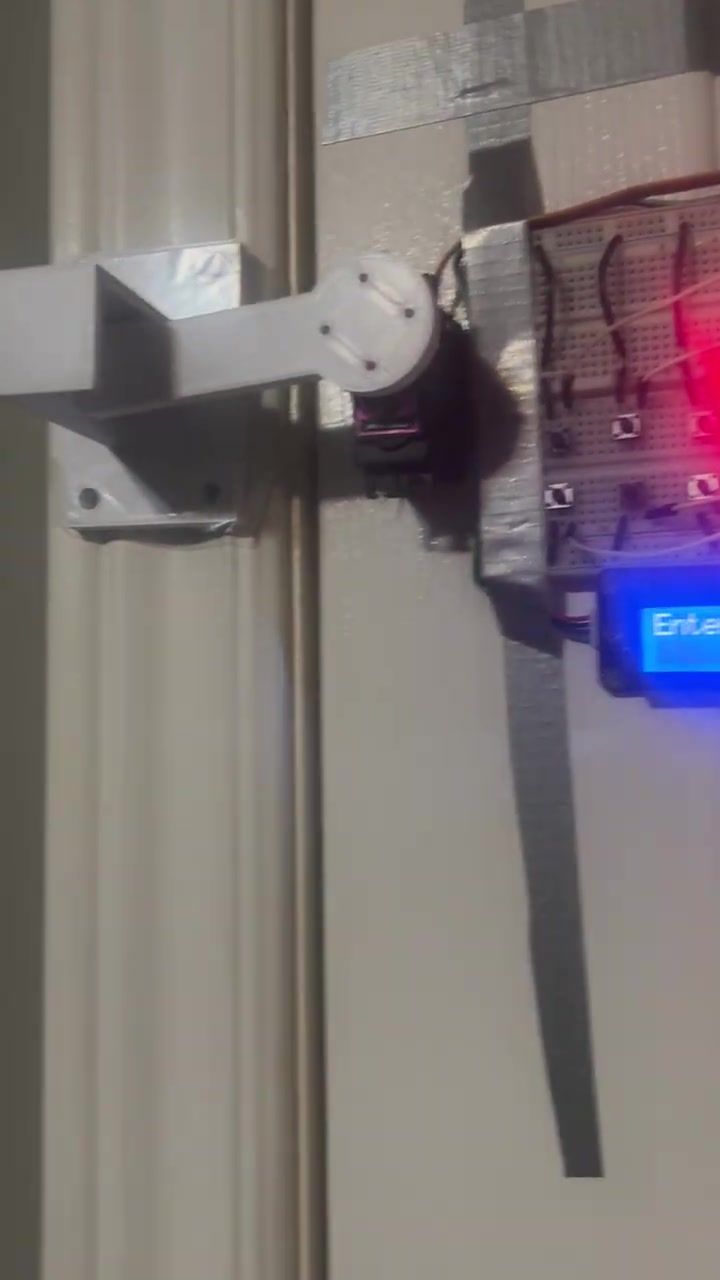
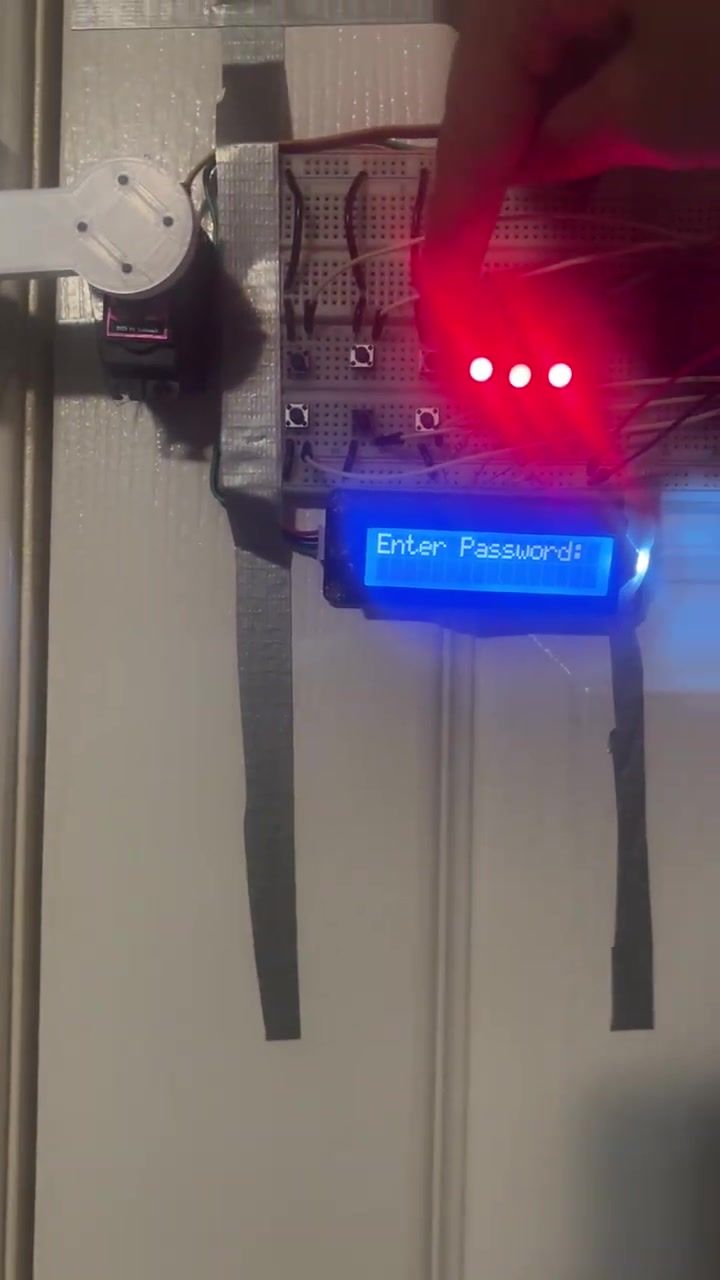
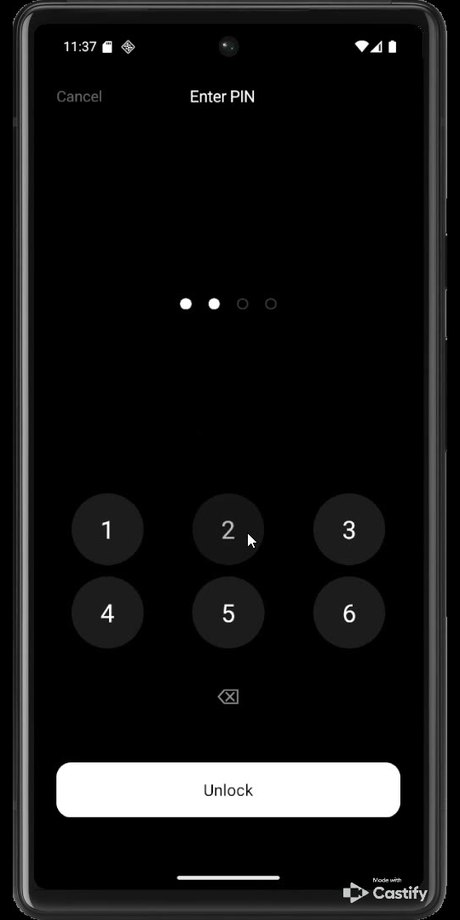
Six buttons give you the digits 1 to 6. Enter four of them and the ESP32 compares what you typed against the stored PIN. If it matches, a 3 kHz tone plays and the servo swings the latch from 0° to 90°. If it does not, you get a 2 kHz tone, one of the three status LEDs goes out, and you have two tries left.
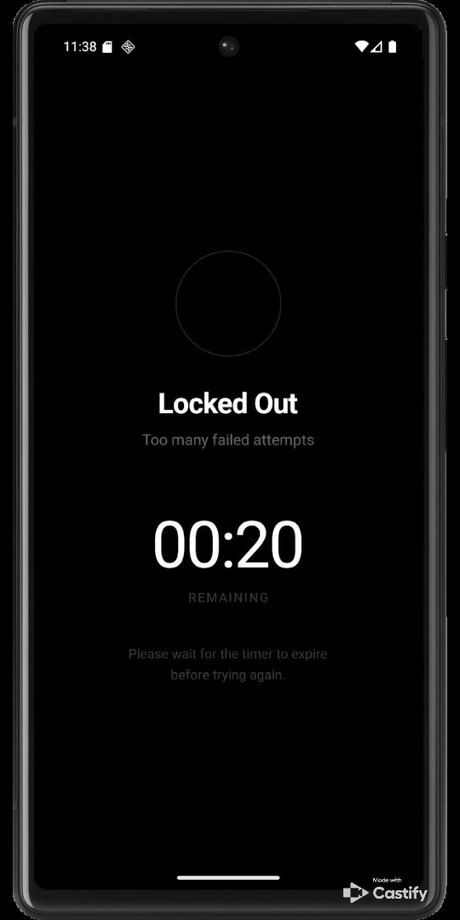
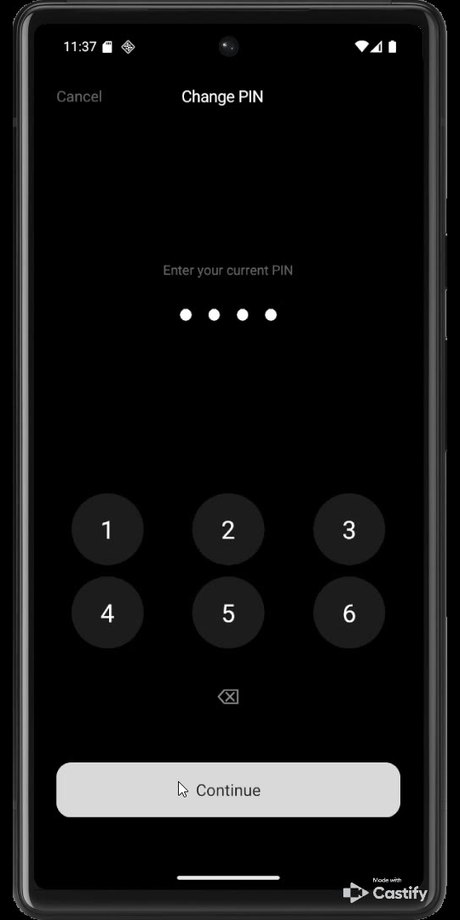
Three failures in a row puts the system into a 60 second lockout. The LCD switches to a countdown and ignores every button until the timer runs out. Once you are in, one button relocks the door and another starts a PIN change: confirm the old code, type a new one, done, with no reflashing.
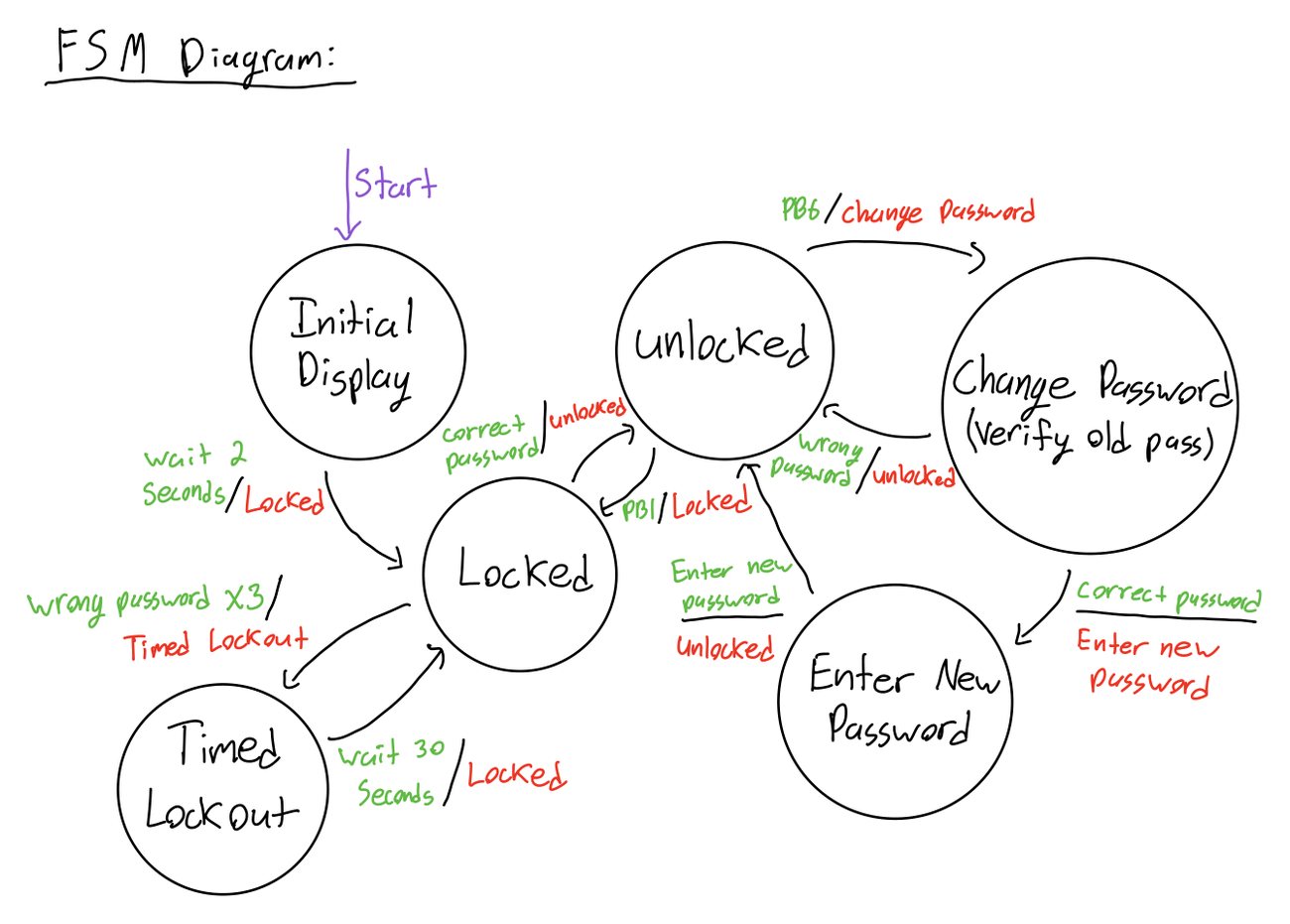
This is the part of the project I care about. I drew the diagram first, six states and every transition between them, and wrote the firmware against that drawing rather than the other way round.

It is a Mealy machine, so the outputs depend on the current state and on the button event that caused the transition, not on the state alone. Read any arrow on that diagram and you get both halves: "wrong password ×3" going in, "Timed Lockout" coming out. What the LCD shows, which tone plays, where the servo sits and how many LEDs are lit all fall out of those pairs.
Writing it this way is why the lockout countdown updates smoothly without ever blocking. millis() gets sampled against the lockout start each time through the loop, so nothing sits in a delay() waiting for sixty seconds while the rest of the system goes deaf.
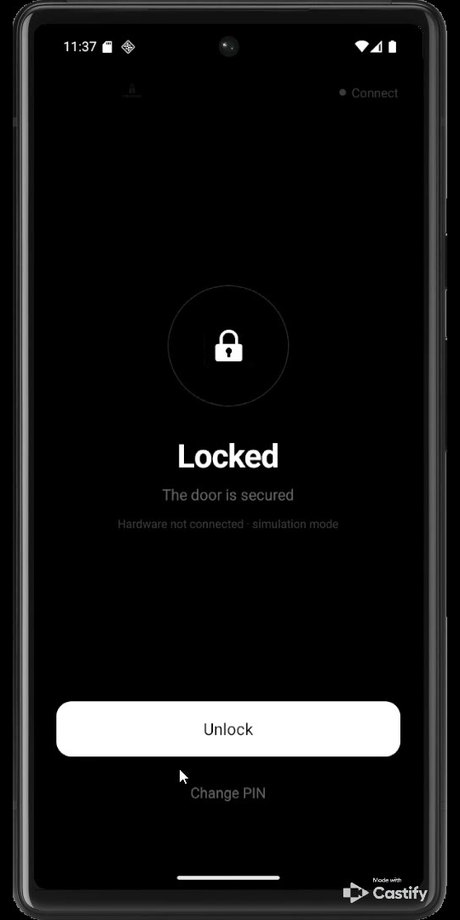
Ten frames from the demo, in the order they happen. Every state on that diagram gets visited except the two second splash at power on.
The same state machine drives a phone app, so the lock can be operated without reaching for the keypad. It mirrors the hardware exactly rather than working around it: the same four digit entry, the same three attempts, the same sixty second lockout with the same countdown. A second interface that quietly allowed more tries would make the lock on the door a decoration.


The course deliverable included a one page summary, which is a useful compression test: everything that matters about the build, at a size you can read across a room.

These are the trade-offs I made for a course prototype, and I would rather list them than pretend they are not there.
while loops, which stall the main loop briefly.Next project
Audio ScaleMcMaster 1P13 · February to March 2025
A kitchen scale that speaks the weight, designed for a client with combined vision and hearing loss.
Arduino · C++ · Load cell · DFPlayer Mini · 3D printing


Our client has Usher syndrome, which costs her both vision and hearing. She cooks constantly and can't read a digital kitchen scale. We had six weeks, limited prototyping resources, and a requirement that the whole thing be cheap enough to build from parts anyone can buy.
Our first concept was a walking stick with obstacle detection: a camera, a speaker, high contrast colours, even glow in the dark surfaces. It was the more impressive design and I argued for it. It also needed a wireless link to a server, and our client had told us her hearing aids already use Bluetooth and that extra connections could interfere with them.
That one constraint killed it. Stepping back and looking at her actual day, cooking was the thing she loved and the thing she was losing to her vision, so we aimed at that instead. Choosing the smaller, less impressive idea turned out to be the best decision we made.
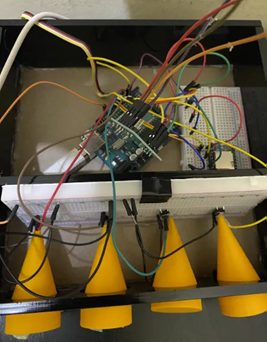
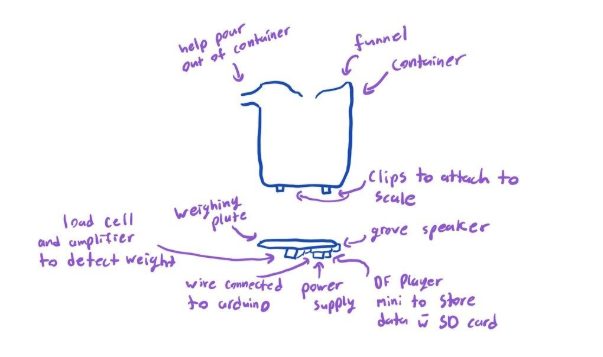
We divided the work by what each of us was actually good at rather than by slicing the project into equal parts. Some people took 3D modelling and speaker integration, others took physical prototyping, sensor calibration and circuit organisation. I took the button interface end to end.
That only works if people talk, because a mechanical change and an electrical change land on each other constantly. The enclosure had to have room for my breadboard. My button caps had to clear the weighing plate. We checked in often enough that neither of those turned into a rebuild.
We used a morph chart to compare options in each part of the design. How would ingredients be held: a bowl, a funnel, a detachable tray? How would weight be measured: a load cell, a pressure sensor, a strain gauge? How would she control it: voice commands, physical buttons, LED indicators? Laying it out that way let us trade complexity against usability instead of guessing.
The design had to weigh without any visual display, speak the result as it changed, give her buttons she could find and press by feel, and survive spills. That last one sounds minor until you remember the thing lives on a kitchen counter.
I owned how she actually touches the scale, which meant the circuit, the firmware and the physical buttons.
I also presented our reasoning for picking the scale over the walking stick, walked through the testing results, and wrote half of the executive summary and half of the conceptual design section of the report.


A few choices shaped everything else. Physical tactile buttons instead of a touchscreen or a companion app, because a flat glass surface gives you nothing to find with your hands. Distinct shapes and textures on each cap so they can be told apart by touch rather than by position. Audio feedback given priority over any visual indicator. And a load cell paired with an Arduino, because it measures reliably and integrates simply, which matters more than sophistication when the thing has to work every day.
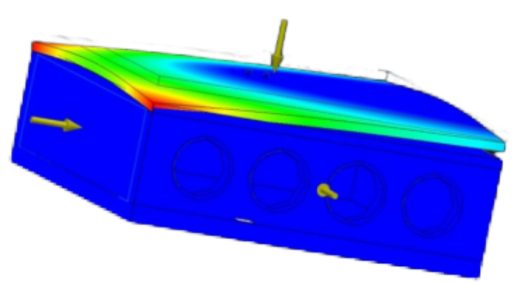
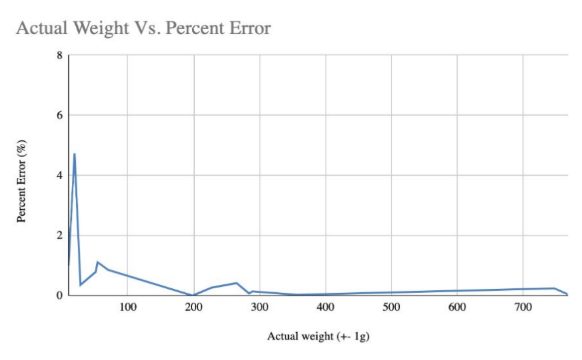
We tested accuracy by weighing known masses and comparing them against what the scale announced, and durability by running a displacement simulation of the enclosure under load. Percent error stayed low across most of the range, and it fell as the applied weight went up, which is the pattern you want on a kitchen scale where the interesting measurements aren't the tiny ones. The simulation showed minimal deformation under normal use.
The qualitative half was repeated hands-on use. The scale stayed stable, the buttons stayed responsive, and the audio came out consistently across trials.


We ran the project off a Gantt chart with weekly milestones, which mattered more than it sounds like it should. By week seven we had sourced the load cell and amplifier and had a first prototype doing the basic job of turning a weight into a number. The two weeks after that were integration: my button system went in, the audio module went in, and the second prototype became something you could hand to someone.
The last stretch was validation. Each function got tested on its own, then the whole thing assembled, then the pitch and the report. Leaving integration until the end would have been the obvious mistake and we managed to avoid it.
The audio came out unclear in testing. The files we'd loaded onto the DFPlayer Mini were taking up too much storage and playing badly, and re-encoding them fixed it outright. It was the single change that improved the final product most, and we only caught it because we tested the audio early instead of at assembly.
The final prototype has four tactile buttons with textured markers, a weighing plate mounted over the load cell, and a case that wipes clean. During the live presentation it measured accurately and spoke every reading without a hitch.
The lesson I took from it: I used to assume the best idea was the most engineered one. Now I think the best idea is the one that fits the person using it, and dropping an idea you like is often the step that gets you there.
The enclosure should be a more durable, water resistant material. It lives on a kitchen counter and ours would not survive a year of that. The internal wiring could be far more compact, which would help both reliability and anyone trying to repair it. The audio needs work in a noisy kitchen, and the range of spoken units is narrower than it should be.
Next project
Wastewater FiltrationMcMaster 1P13 · October to December 2024
A baggage handling system for a simulated international airport, mechanical and software together.
Python · File I/O · Autodesk Inventor · Q-arm · 3D printing


Baggage handling at airports is expensive and disorganised, and bags end up in the wrong place. We had to design a system that sorts luggage and moves it to the right destination quickly, with both a physical mechanism and the software driving it.
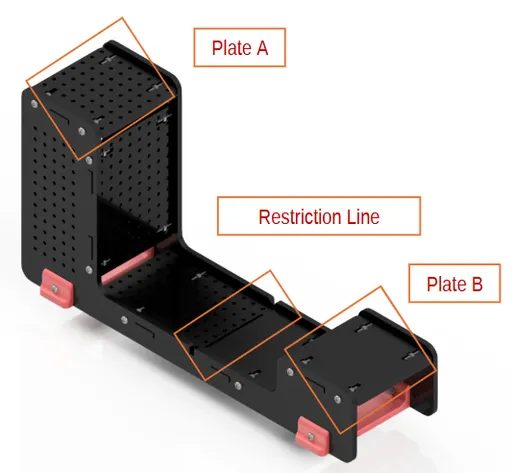
The constraints were geometric. Nothing could extend past a restriction line between the two plates when the ramp was retracted, every part had to stay inside a defined physical envelope, and the luggage had to arrive undamaged.
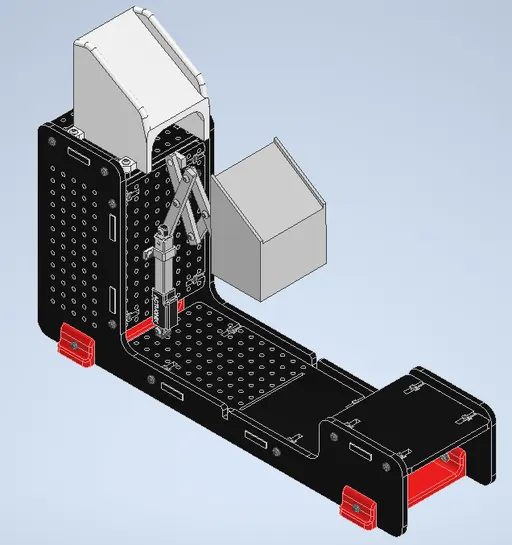
The mechanism pairs a conveyor belt turned by a rotary actuator with a scissor lift ramp extended by a linear actuator. The Python software drives a Q-arm for the precise handling and puts passenger and baggage data behind an interface you can actually read.
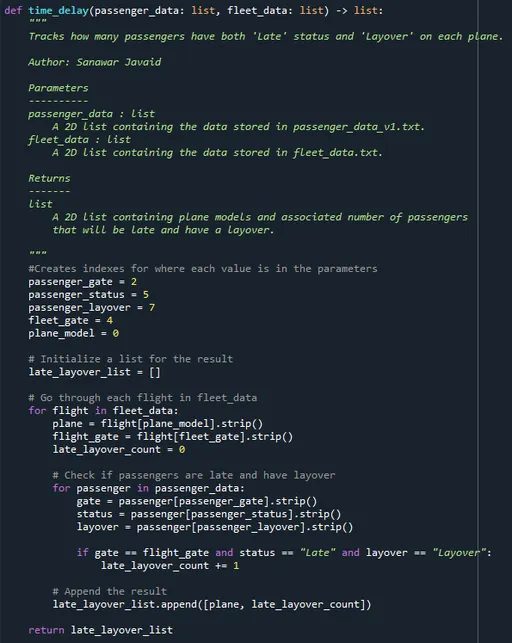
The team wrote three core functions between us. Mine tracked how many passengers on each plane had both "late" status and a layover, reading from a supplied data file. That meant file input and two dimensional lists, neither of which I had used before, and a fair amount of printing things out to find where my indices were wrong.
Debugging that function is what made the Q-arm work. The arm needed a lot of trial and error to position correctly, and by then I had a habit of checking my assumptions one line at a time instead of staring at the whole thing hoping to spot it.


We tested in two directions. Load simulations confirmed the structure held up under the weights we expected without deforming enough to matter. Then we ran the mechanism repeatedly to check that horizontal and vertical transport both stayed smooth, and that nothing crossed the restriction boundary when the ramp was retracted. Watching it run is how we found the screws catching on the supports, which no simulation would have told us.
Separating horizontal from vertical motion is the decision the whole design rests on. Once the conveyor owned lifting and the ramp owned reaching, both could be tuned for one job and the restriction line stopped being a problem. We picked actuator-driven mechanisms over anything more improvised because they repeat the same motion precisely, and precision was worth more to us than saving weight.
As coordinator I called and recorded every meeting that happened outside our design studio sessions, and kept a logbook of all of it: the date, where we met, and what actually got decided. Some of those entries are the project's real history. Meeting at Thode because three of our biggest parts were going to take longer to print than our studio time allowed. Finishing one function in the evening after the other two were done in studio. Booking extra test time before the interview so we could find problems while there was still room to fix them.
I had never kept a record like that before and assumed it was paperwork. It made me pay closer attention, and the log got more useful the more involved I became.
My ramp moved luggage horizontally across one plane. It couldn't lift. We needed movement in two dimensions and I had solved one of them, which took the team a while to work around. The answer was to add the conveyor belt for vertical travel and leave the ramp doing what it was good at, pushing bags past the restriction line.
Keeping the logbook was new to me and I expected it to be busywork. It made me pay closer attention to what the team was actually doing, and the record got better because I was more involved. The harder lesson was time management. We ran out of design studio hours for 3D printing and had to find the Thode makerspace instead, and the team code and report both came together in a last minute push. We got there, but the stress was self-inflicted and avoidable.
The mechanical tolerances are loose enough to cause friction we didn't need, and tightening them is the first thing I'd do. Actuator response time is the next, since a lot of the cycle is spent waiting. On the software side the sorting logic works but isn't quick, and it would take real rewriting rather than tuning. All of that assumes more physical testing than eight weeks allowed.
Next project
CleoMcMaster 1P13 · January to February 2025
Removing ciprofloxacin from hospital wastewater for a rural hospital in Byron Bay, under Australian discharge rules.
Granta EduPack · MPI derivation · Ashby charts · Eco-audit


Design a filtration system that pulls ciprofloxacin, a pharmaceutical pollutant, out of hospital wastewater. The site was a rural hospital in Byron Bay, Australia, where discharge regulations are strict. The system had to survive being wet all the time, draw very little energy, comply with Australian environmental law, and stay affordable across its whole life rather than just at purchase.
The constraints did most of the narrowing for us. The system sits in water permanently, so anything that degrades wet was out. It had to draw very little energy, because a rural hospital is not going to run a power hungry filter around the clock. It had to comply with Australian environmental law. And it had to be affordable across its whole life rather than just at purchase, which rules out cheap things that need replacing.
Against that, what we wanted: remove the ciprofloxacin effectively, use sustainable and recyclable materials, and keep the carbon footprint down.
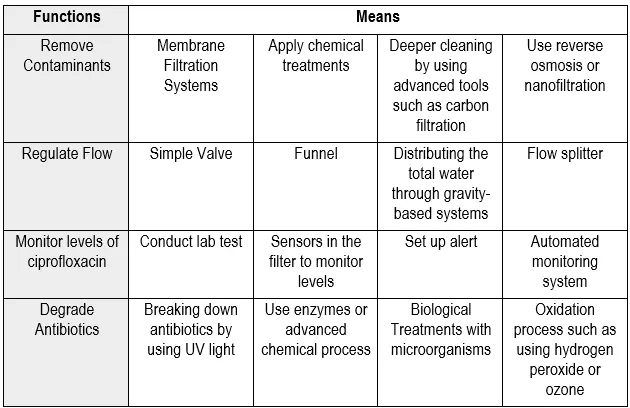
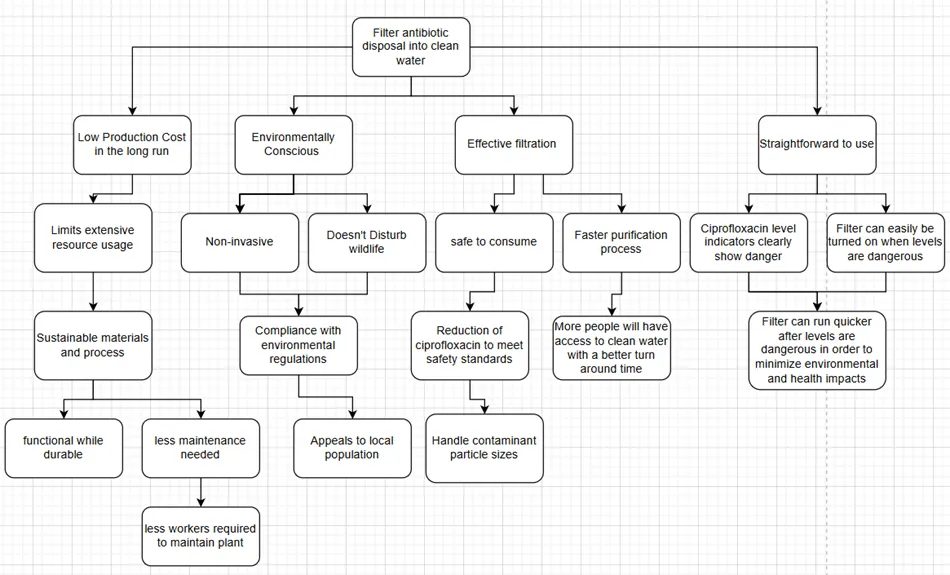
We started with an objective tree to separate what we wanted from what we were bound by, then a morph chart to generate options for the filtration mechanism, flow control, degradation and monitoring.
The objective tree is the one I would keep. Writing "filter antibiotic disposal into clean water" at the top and then forcing every branch underneath to be a real sub-goal made it obvious which of our ideas were goals and which were just features we liked.
My research covered three filtration approaches: deep-bed, membrane-based and electro filtration. Comparing them is what pointed the team toward membrane-based systems as the most effective and economical way to catch ciprofloxacin specifically, and it cut several branches off the morph chart.


This was my main technical contribution. We screened materials in Granta EduPack against four criteria: cost, carbon footprint, stiffness and strength. That got us to a shortlist of concrete, cement and coir fibre.
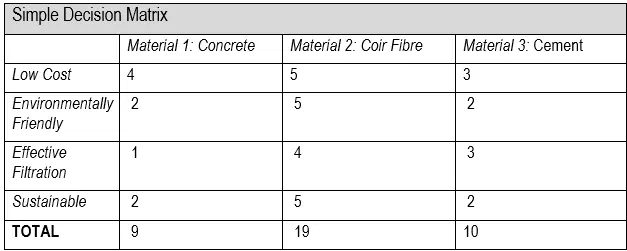
We ran a weighted decision matrix over the shortlist, scoring each material on cost, environmental friendliness, filtration effectiveness and sustainability. Coir fibre took 19 points against 10 for cement and 9 for concrete, which is not a close result. It's naturally porous, has a low footprint, and is cheap because it's a byproduct of agricultural waste. We checked the design against the Environment Protection and Biodiversity Conservation Act and the Sustainable Procurement Guide to confirm it met national standards.


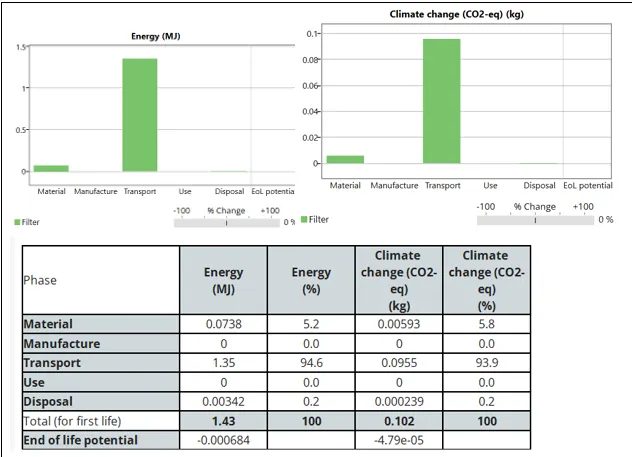
Almost all of the energy and carbon in the coir fibre option came from transporting it. Transport accounted for 94.6% of the energy and 93.9% of the CO2, against essentially nothing for use and disposal. That wasn't what we expected and it forced us to re-run the comparison properly rather than assume the natural material won by default. It still came out ahead once we weighed the full picture, and the life cycle analysis confirmed it's recyclable and biodegradable at end of life. If the design were built for real, sourcing the fibre locally is the single change that would matter most.
I went in assuming concrete or cement would win, because coir fibre looks like a handful of string. Reading into recyclability and environmental impact changed my mind, and that changed what I think a good solution means. It was also the first project where government regulation was part of the design rather than a box to tick afterwards. If I did it again I'd read the Australian standards in week one instead of week four.
Next project
Airport Baggage SystemAway from the bench
A court, a team, a driveway that needs clearing, and a few trips somebody else planned better than I would have.
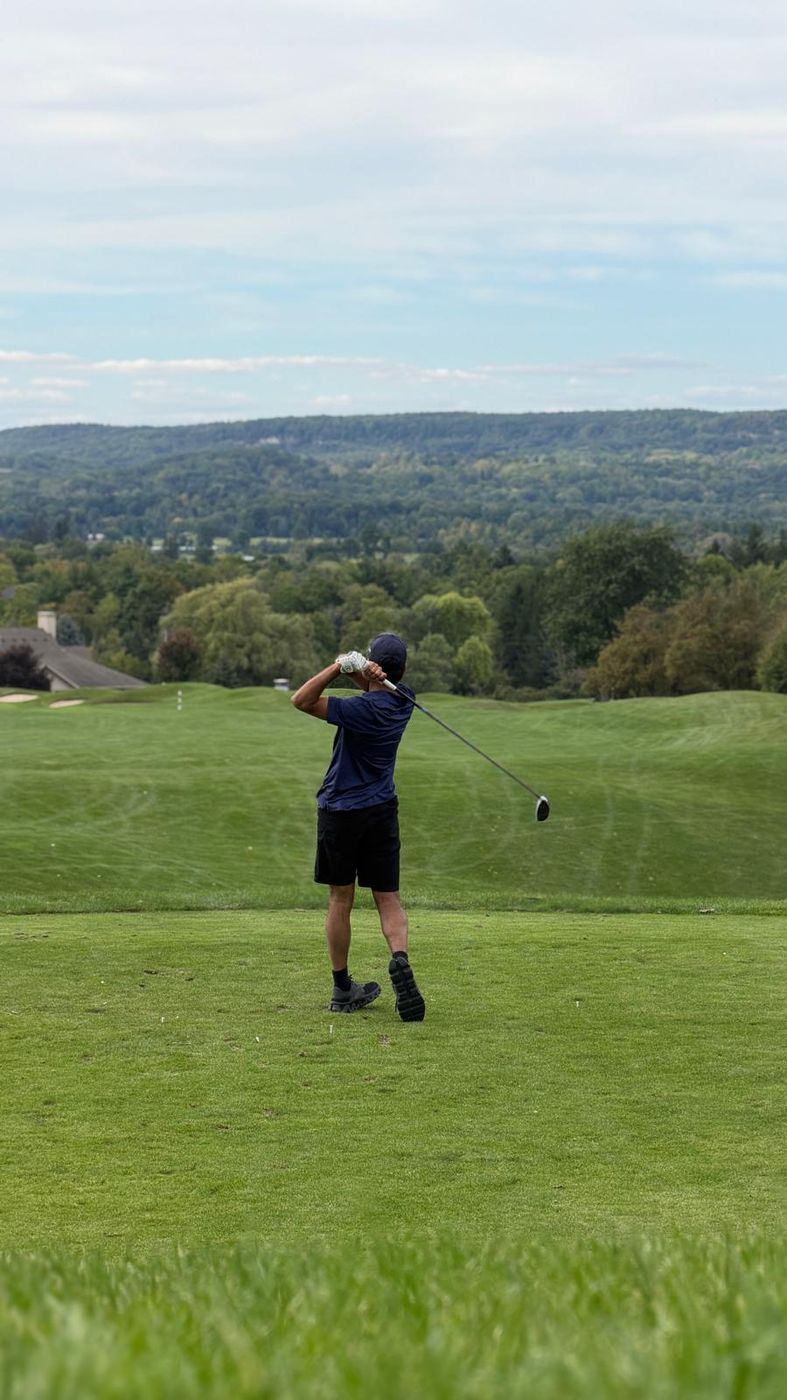
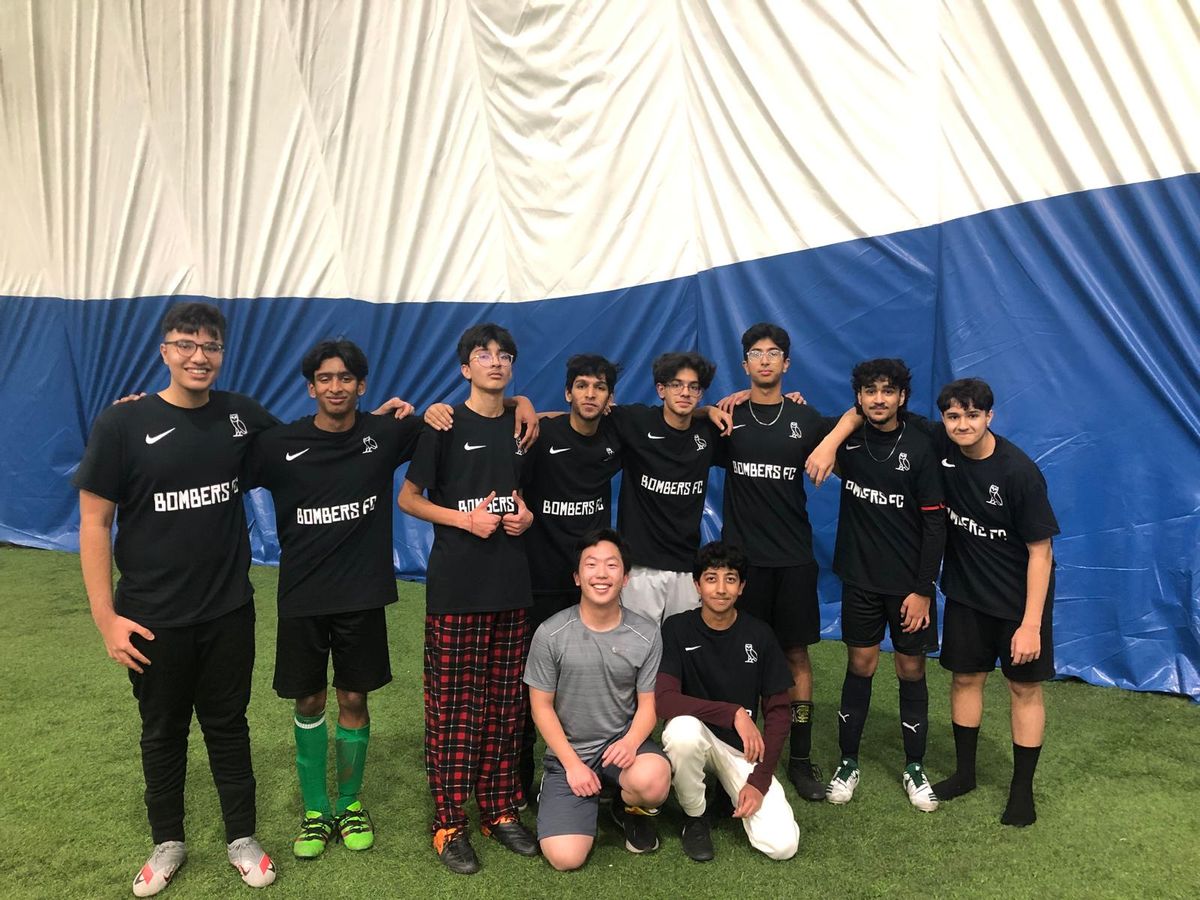
Basketball and volleyball are the two I keep going back to. Soccer is pickup with whoever answers the group chat. Golf came last and is going slowly.


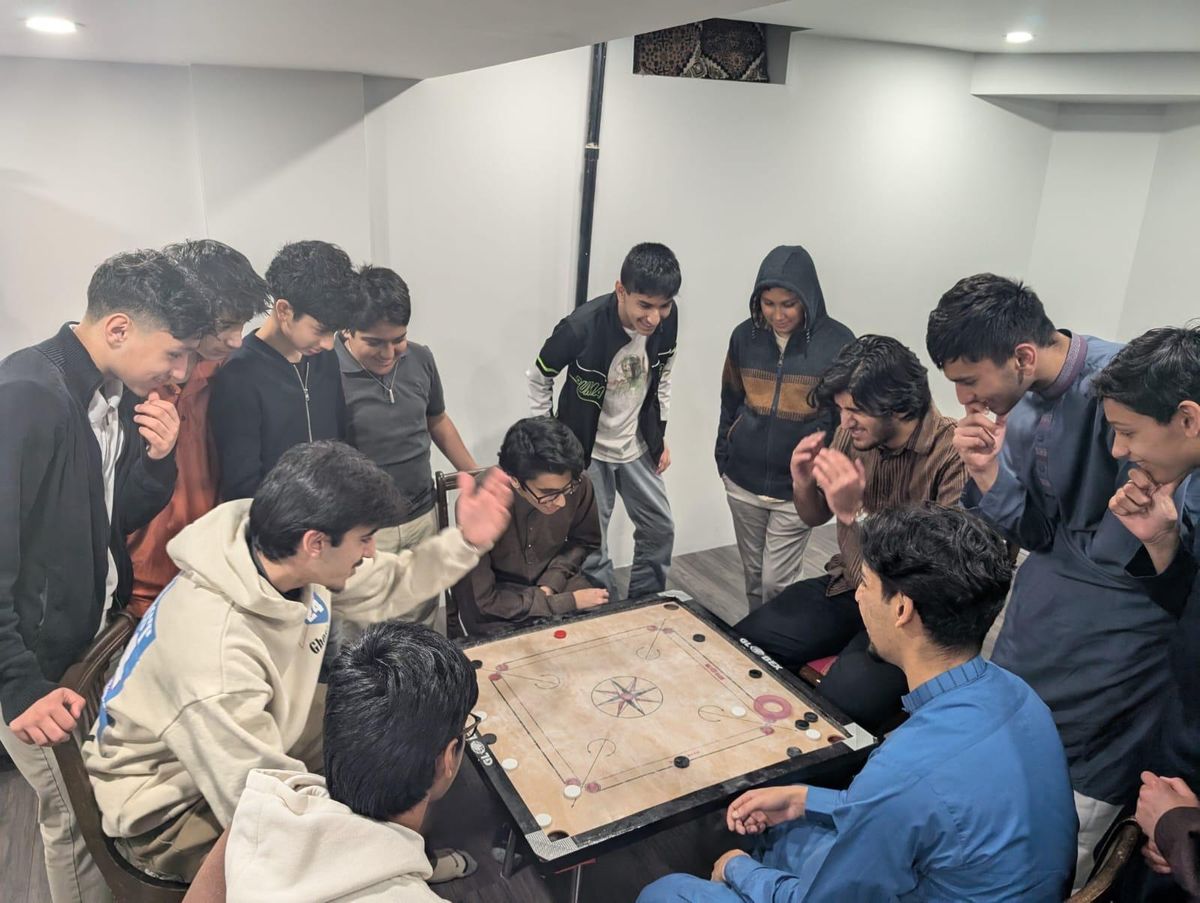
A lot of my weekends go to things my community puts on. Food drives, blood drives, and digging out whoever got buried worst in the last storm. None of it is complicated. It mostly needs people who turn up.


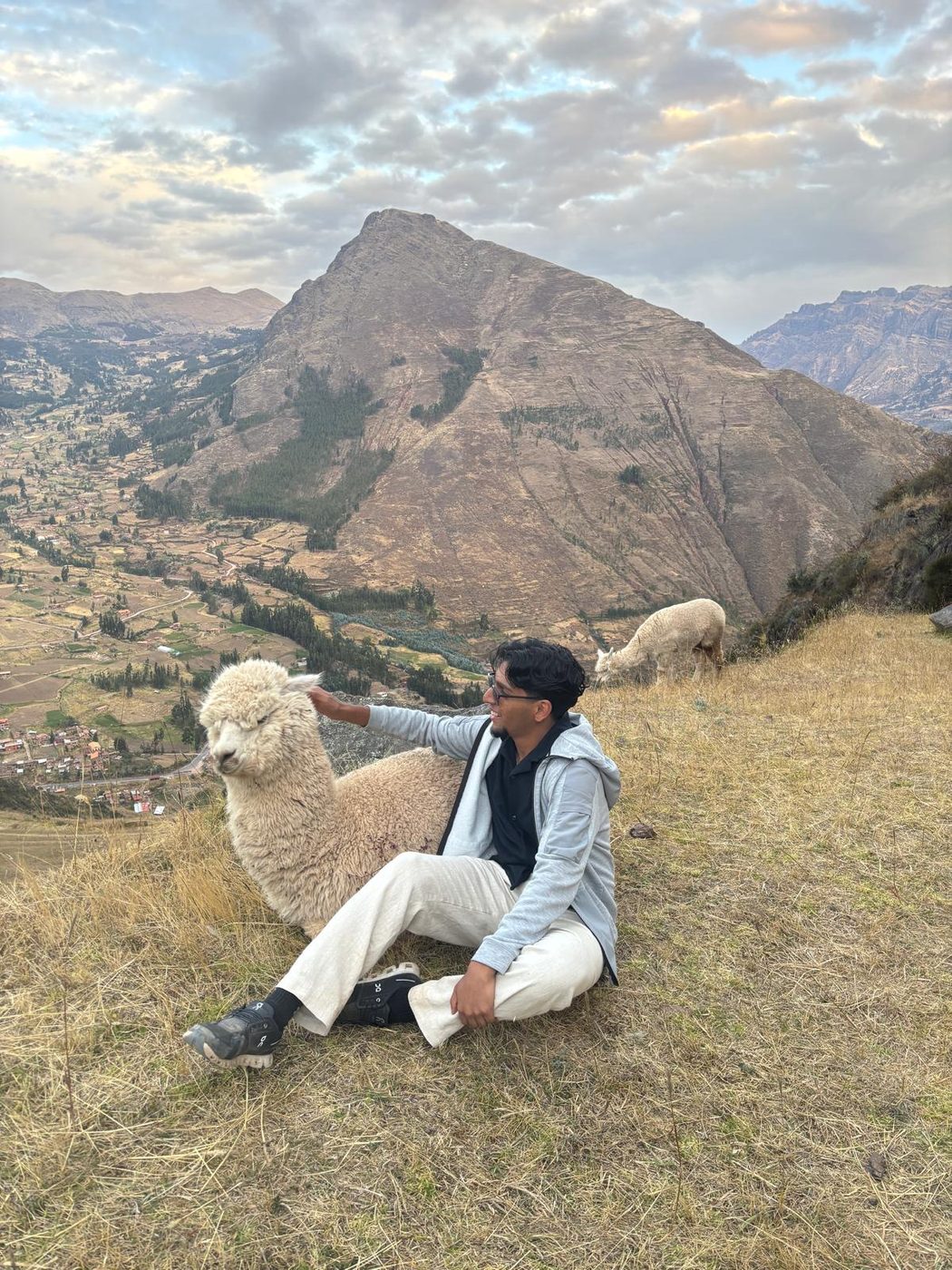
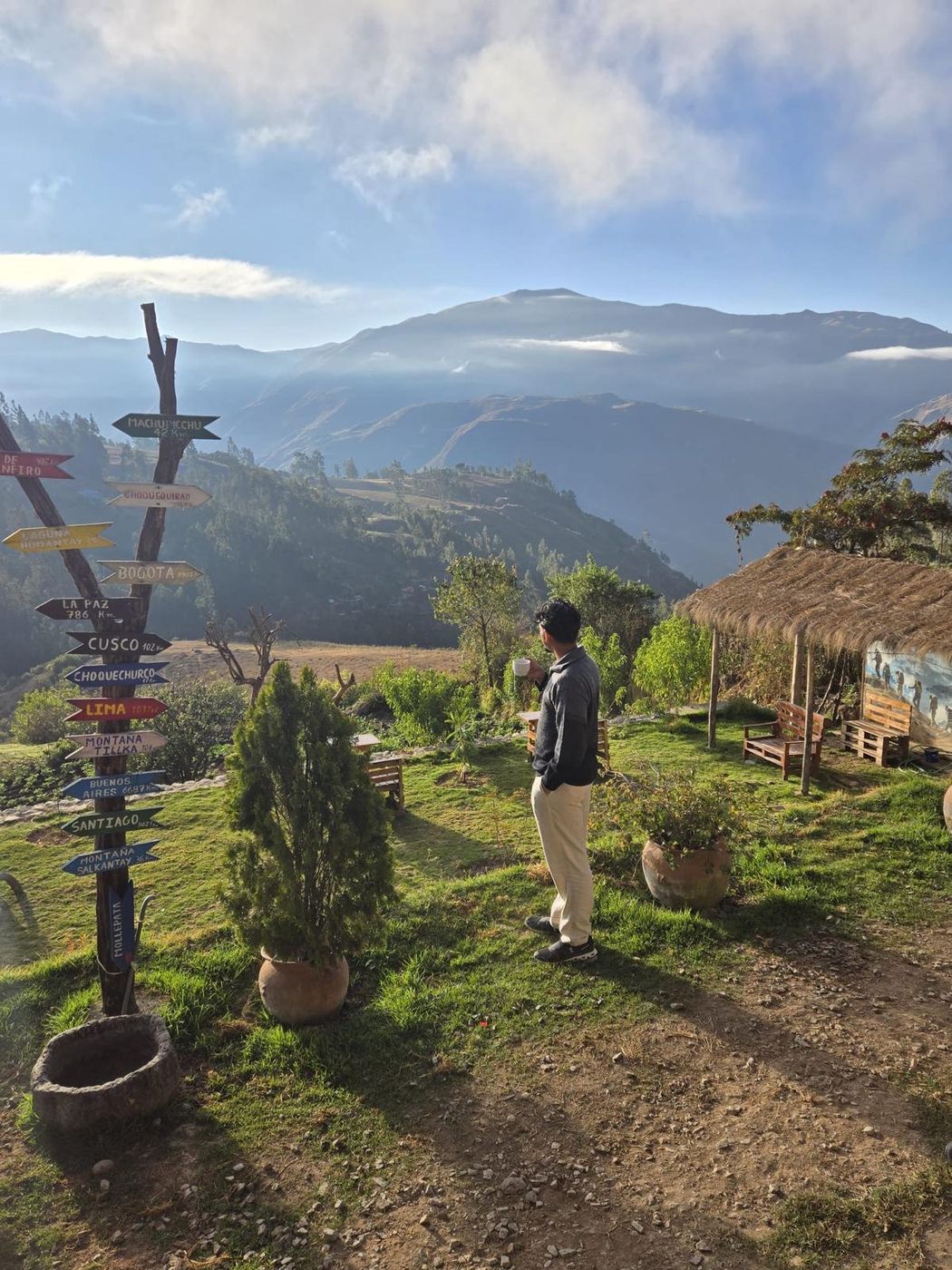
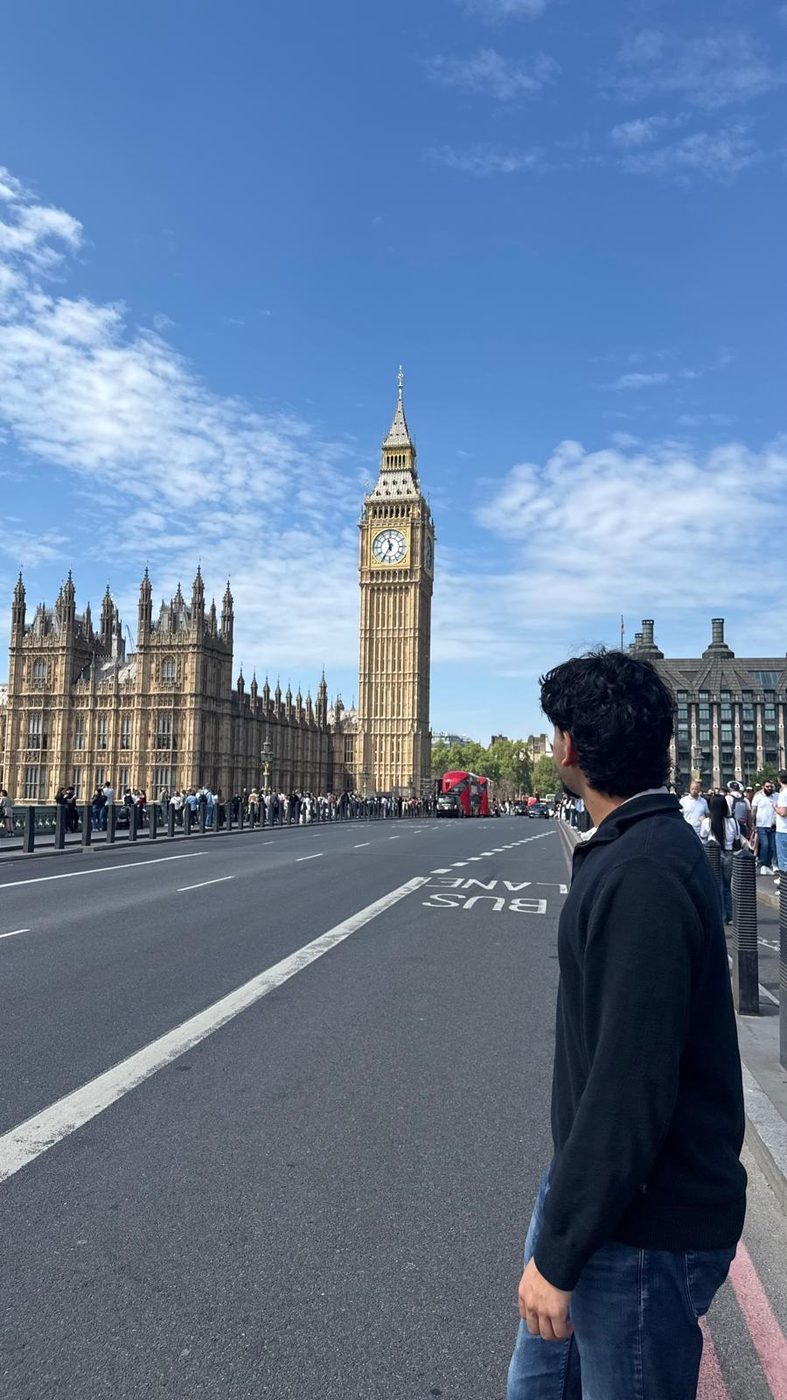
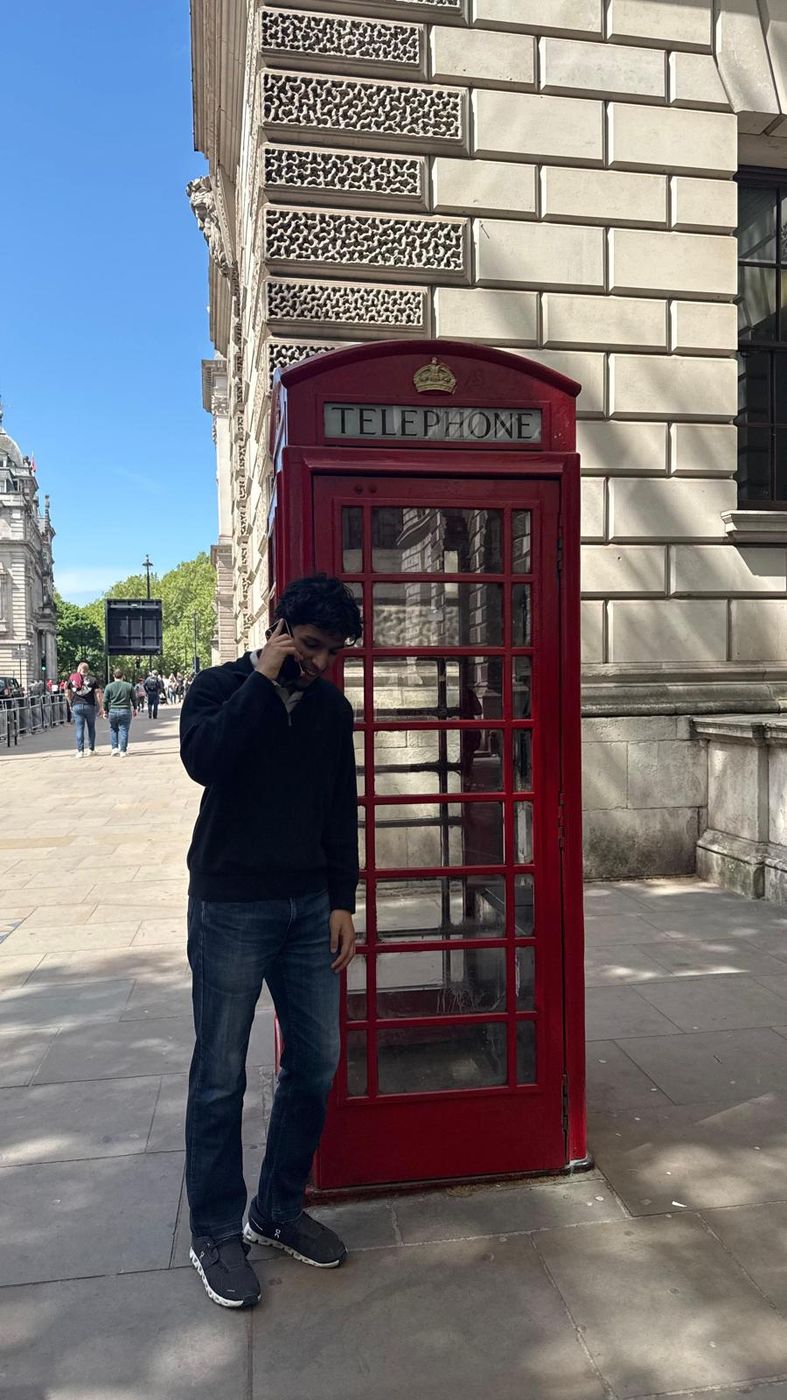
Peru was the big one. Cusco, the valley below it, and markets where I bought more than I could reasonably carry home. London was shorter and colder.


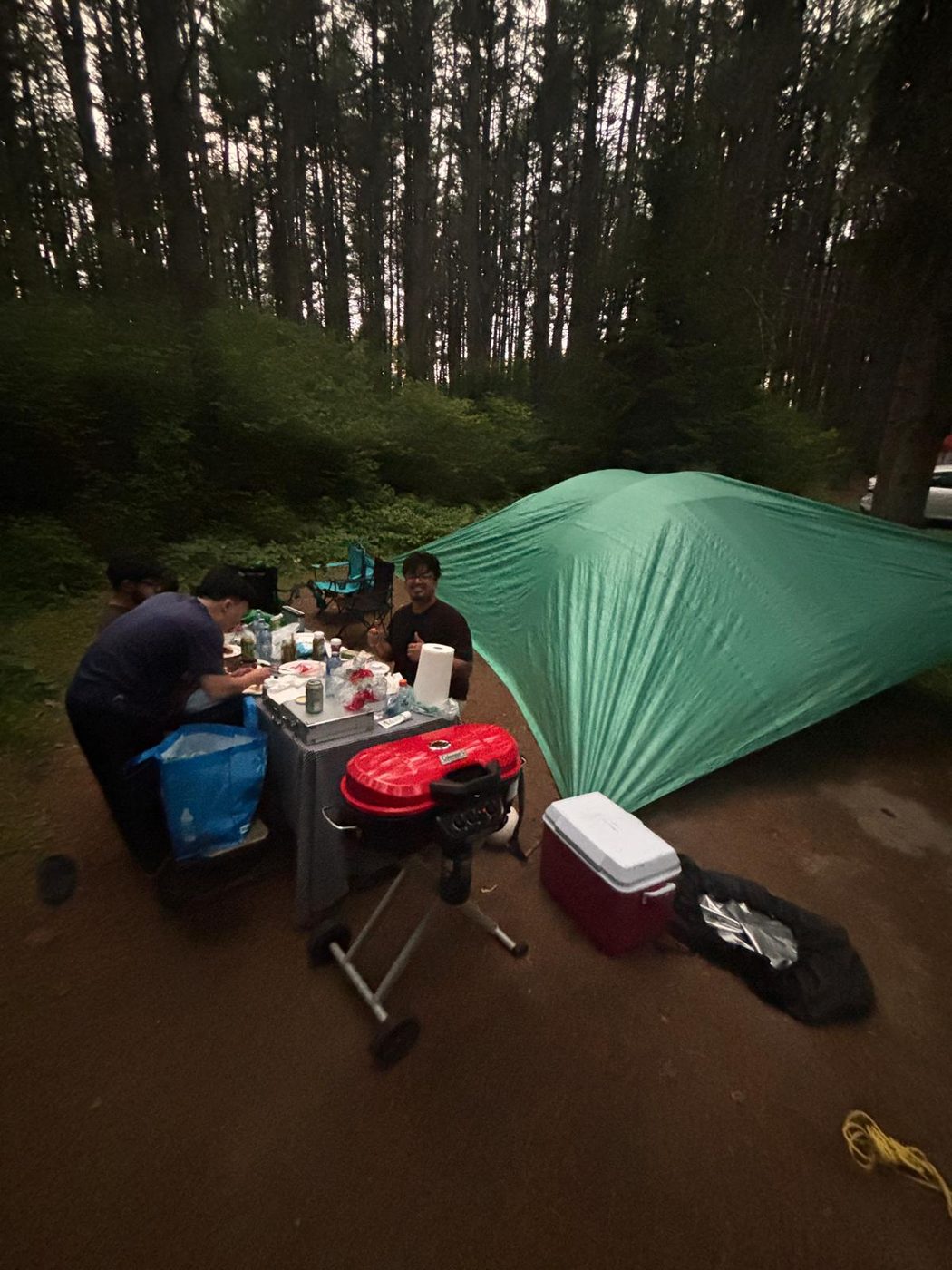
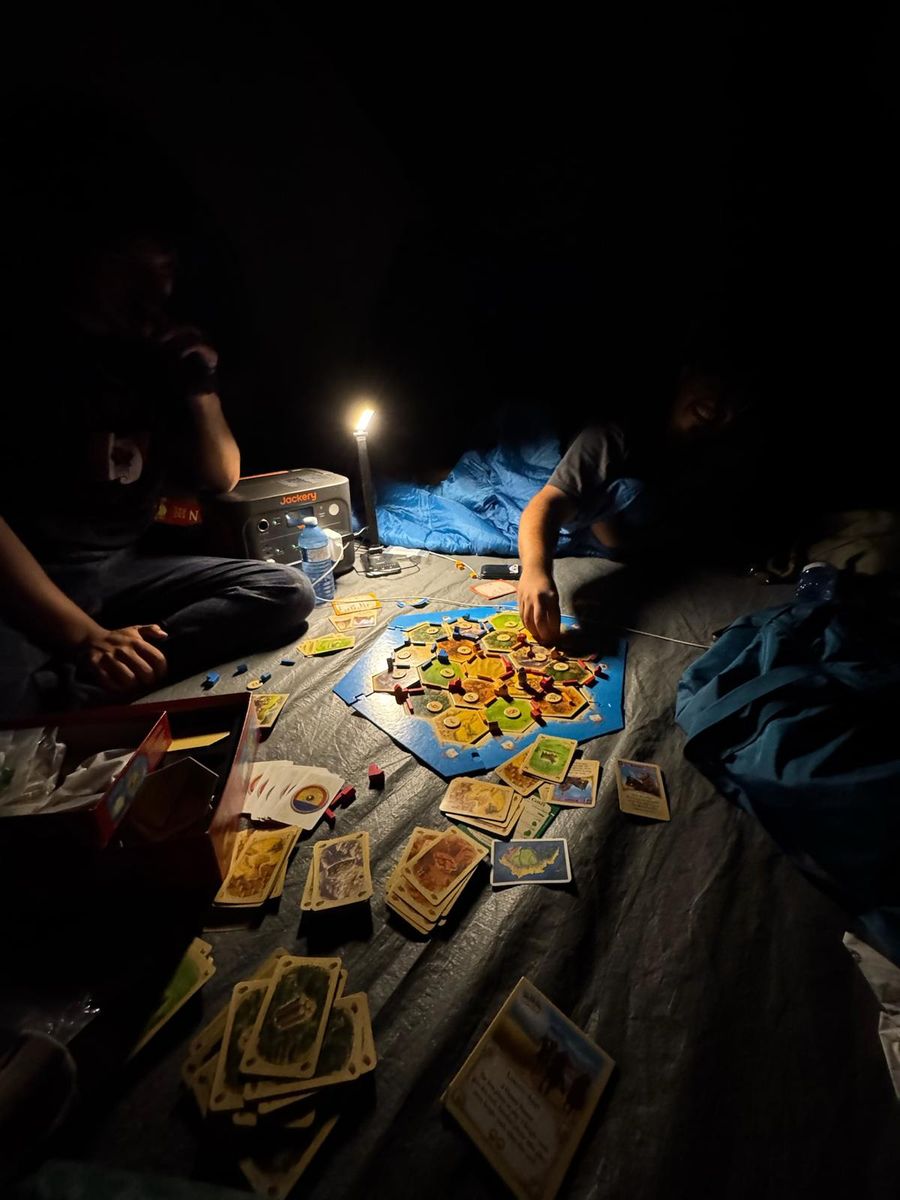
Camping with the same group most summers, waterfalls that justify the walk in, a season of snowboarding, and one jump out of a plane that I would do again.


The rest of it, in no particular order.